
Last updated November 21, 2026
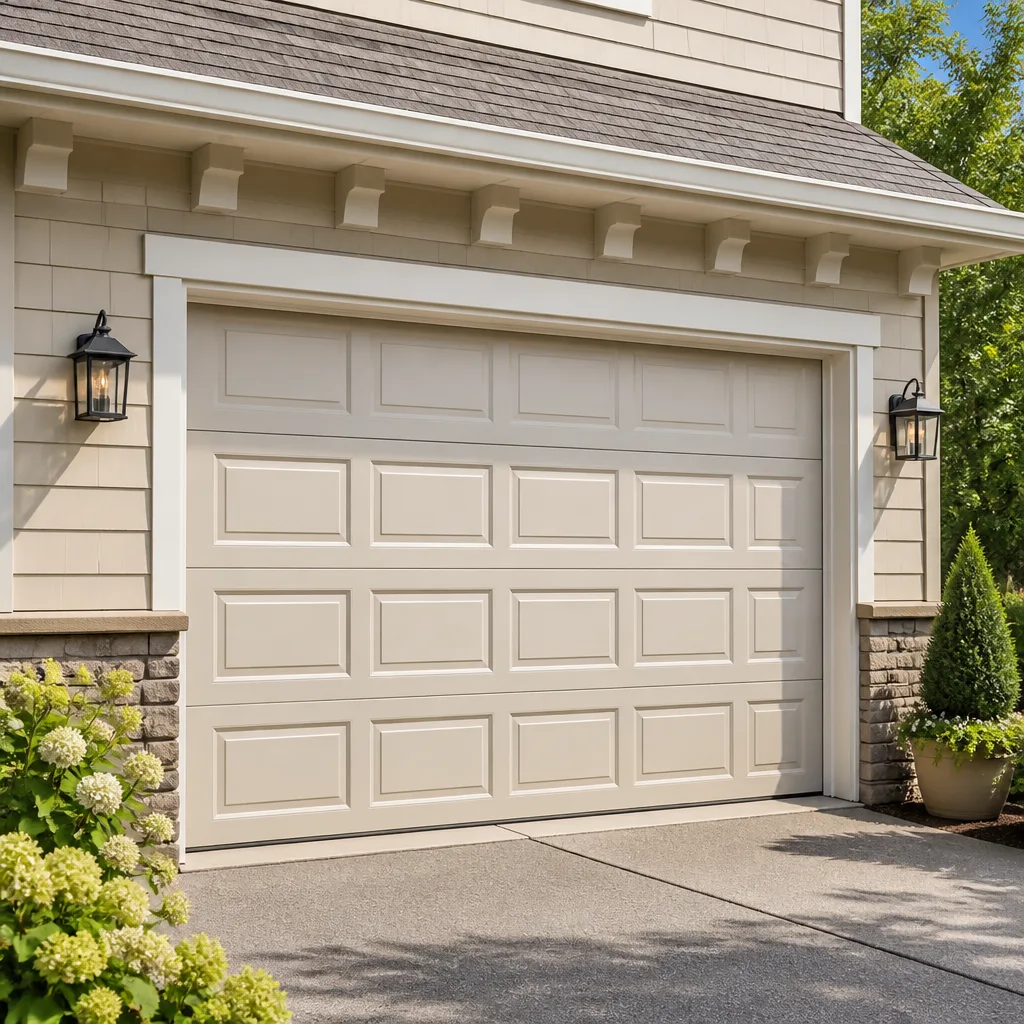 Raised-panel steel
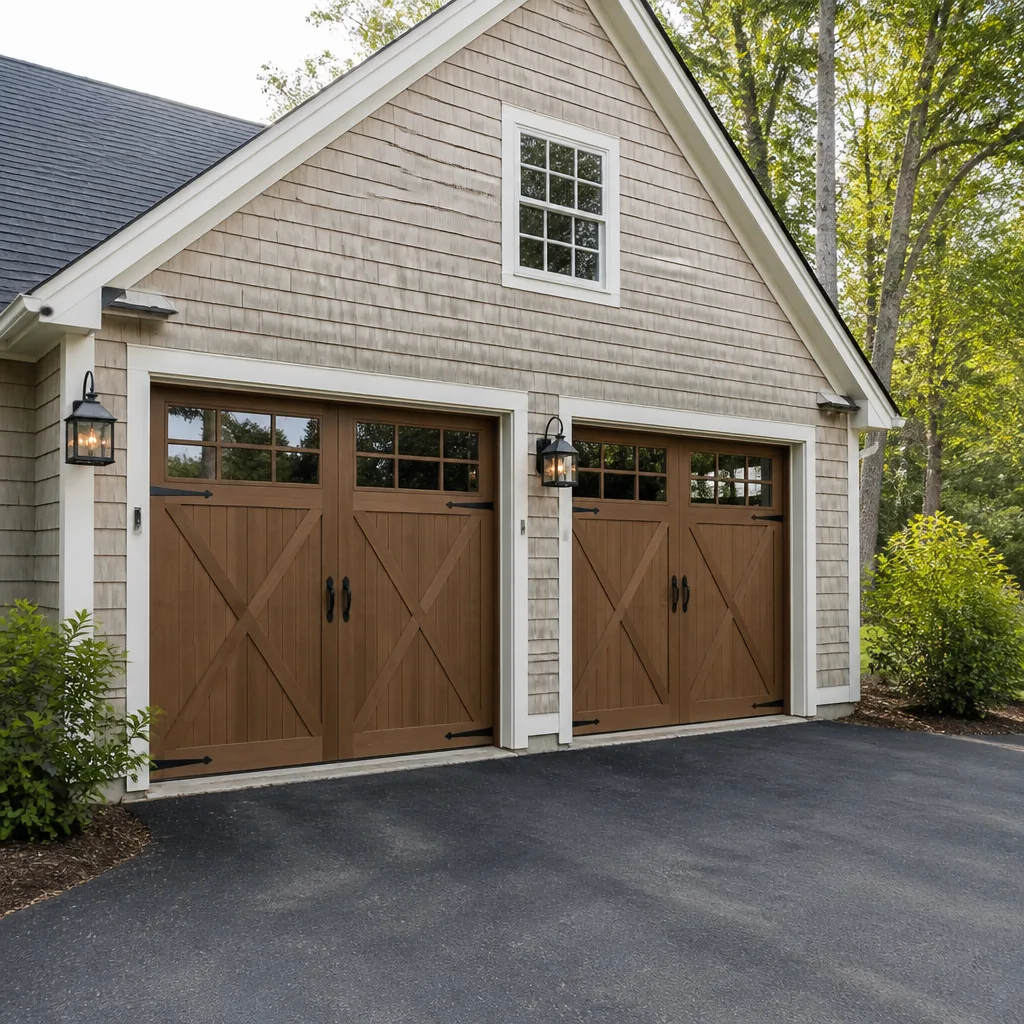 Carriage house
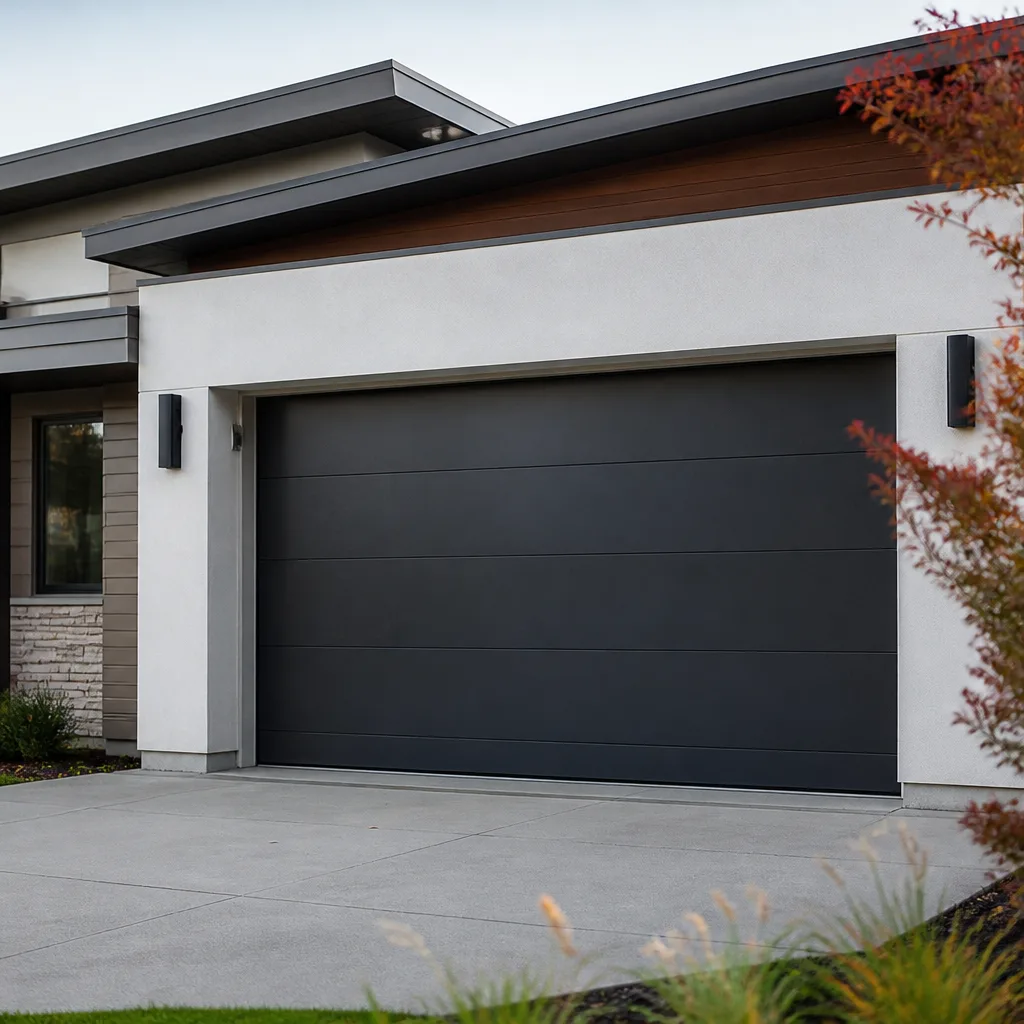 Modern flush
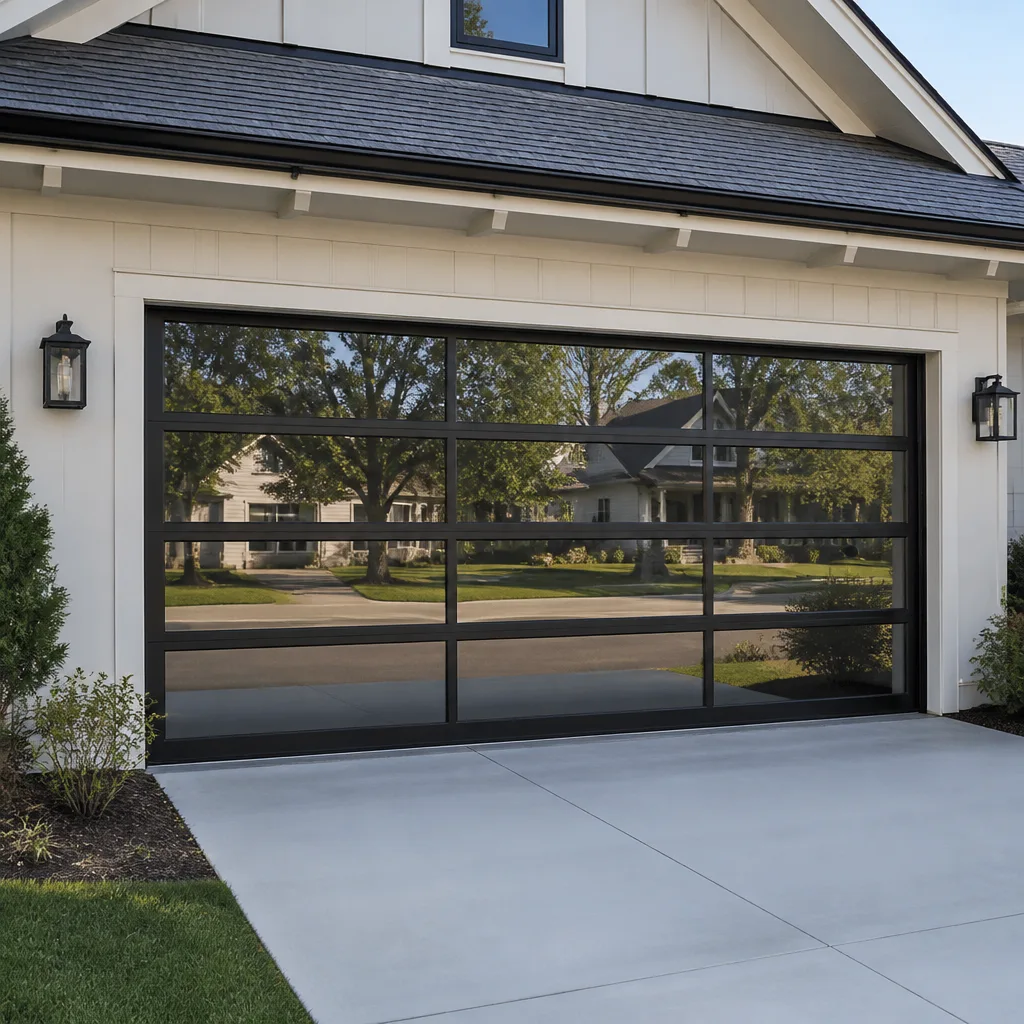 Full-view glass
 LiftMaster openers
 Chamberlain openers
Full 25-point door and opener safety check with every visit - springs, cables, rollers, tracks, and your LiftMaster or Chamberlain opener included
You get a price before we start. It does not change when the pro arrives.
Get your free estimateGarage Door Warning Signs: A Jamaica Plain Homeowner’s Reference Guide
A garage door that’s “a little slow” and a garage door that’s “about to drop” can look identical to an untrained eye. The difference lives in four specific details: how the door travels, what its springs look like up close, what noises it makes at the start and end of each cycle, and how the bottom seal sits against the floor. Miss those details and you’re making a safety decision blind every time you hit the button. This guide breaks garage door warning signs into what you see, what you hear, and how the door behaves, then sorts each one by real urgency, so you know what to watch and what to schedule. We’ve written it for Jamaica Plain homeowners in older housing stock where garages were often added later or carved out of basements.
Quick Answer
Garage door warning signs fall into three groups: visual (spring gaps, rust, rot, worn rollers), auditory (bangs, grinding, scraping, rattling), and behavioral (slow travel, reversing, uneven closing, doors that feel heavy). Signs like a snapped spring, a door that reverses on close, or a door that won’t stay up mean stop using it and call a specialist. Signs like minor squeaks, a slow opener, or a stiff seal mean schedule service soon. In Jamaica Plain’s older garages, moisture damage at the base of the door and frame is one of the most commonly missed warning signs.
Styles & brands we work with
- Raised-panel steel
- Carriage house
- Modern flush
- Full-view glass
- LiftMaster openers
- Chamberlain openers
Table of Contents
- What You See: Visual Warning Signs on a Garage Door
- What You Hear: Auditory Warning Signs You Shouldn’t Ignore
- How the Door Moves: Behavioral Warning Signs
- Spring Warning Signs and What Each One Means
- Opener Warning Signs Most Homeowners Misread
- Moisture and Wood Rot Signs in Older Jamaica Plain Garages
- Urgency Tiers: Fix This Week vs. Stop Using the Door
- Common Mistakes to Avoid
What You See: Visual Warning Signs on a Garage Door
Visual signs are the ones you can catch on a walk-around without touching anything. Run through this checklist after any storm, and once each season in Jamaica Plain:
- Look up at the springs. On a torsion system, check the horizontal spring above the door for a visible gap in the coil. A split anywhere in the coil means the spring has failed.
- Check the bottom seal. A seal that’s flattened, torn, or hanging below the door is no longer doing its job against rain and snowmelt.
- Scan the rails for rust. Rust streaks on the vertical tracks, especially the lower sections, point to water reaching the door hardware.
- Inspect the panels. Dents, cracks, and bubbling paint on steel panels, or soft spots on wood panels, mean the door’s structure has taken damage.
- Look at the hinges and rollers. Worn rollers show flat spots or cracks. Hinges that are loose, bent, or pulling away from the panel indicate fasteners are working loose.
- Check the opener rail and hangers. The rail should be straight and the brackets tight. A sagging rail puts strain on the opener’s drive.
- Look at the floor weatherstripping. A threshold strip that’s cracked or lifted lets water under the door and against the bottom panel.
None of these signs on their own means the door is unsafe. But several together tell you the door’s hardware is aging out as a system, which matters more than any single part.
What You Hear: Auditory Warning Signs You Shouldn’t Ignore
Sound tells you what sight can miss. A garage door should sound like a low, steady hum with a soft roll. Anything else is worth decoding.
- A loud bang followed by silence. Almost always a torsion spring breaking. The door won’t open afterward, and the spring is dangerous to touch.
- Grinding during travel. Usually a dry or failing roller, a bent track, or a worn opener gear. Grinding that appears suddenly points to the opener; grinding that has worsened over weeks points to the door’s hardware.
- Scraping or metal-on-metal contact. A door rubbing its track, often after a panel has shifted or a roller has come loose.
- Rattling and shuddering. Loose hinges, a slack opener chain, or worn bushings. Harmless-sounding, but it accelerates wear on everything it touches.
- A hum then nothing. The opener is getting power but the drive isn’t engaging. That’s a motor, capacitor, or gear issue, not a door issue.
- Repeated clicking. Often a safety sensor or limit switch that needs adjustment, common on older Genie and Chamberlain units.
Note which sound happens when – at start, mid-travel, or at the end of the cycle. That timing is often what pinpoints the failing part.
How the Door Moves: Behavioral Warning Signs
Behavioral signs are how the door performs. These are the ones that turn into safety decisions fastest.
- The door reverses on close before it reaches the floor. If the safety sensors are aligned, this usually means obstruction or resistance the opener is reading as a person or object.
- The door travels unevenly or tilts on the way up. A sign that one side is binding or one spring is weak.
- The opener only moves a few inches then stops. Usually a limit switch, a self-diagnostic fault, or a binding track the opener can’t push past.
- The remote works only from close range. A sign the opener’s receiver or the remote’s battery is fading, not that the door is broken.
- The door feels very heavy when disconnected from the opener. A tested sign of weak or failed springs. Use extreme caution disconnecting the door – it can fall.
- The door slams at the bottom. The spring’s tension has relaxed and it’s no longer counterbalancing the door’s weight properly.
If any single behavior on this list shows up along with a visual or auditory sign, treat the door as compromised until a specialist looks at it. For repair of any of these issues, our Garage Door Repair Jamaica Plain service page walks through what we handle.
Spring Warning Signs and What Each One Means
Springs carry the entire weight of the door. A garage door in Jamaica Plain is often 100+ pounds, and a torsion spring is holding that weight under tension at all times. Spring failures are the most common serious garage door failure we see, and each symptom points to a slightly different stage of failure.
Gap in the Torsion Spring Coil
A visible split anywhere in the coil means the spring has fractured. Torsion springs are designed for a set cycle life and fail at the point where the coil’s stress is highest. Once the gap is there, the spring is no longer balancing the door. Do not use the door. It’s heavy, the opener is now lifting the full weight alone, and the opener will fail next if it hasn’t already.
Door Feels Heavy on Manual Lift
Test this only by disconnecting the opener and lifting slowly. A properly balanced door lifts with one hand and stays where you leave it mid-travel. A door that feels heavy and falls back down means the springs are too weak for the door’s weight – often a sign the wrong gauge spring was installed at some point, or the springs are near end of life.
Loud Bang Followed by the Door Not Opening
This is the moment a torsion spring snaps. The bang is the spring releasing its stored energy. The door stops opening because the opener can’t lift the dead weight alone. This is an immediate stop-use situation.
Extension Spring Signs
If your door uses extension springs running above the tracks, check for stretched springs, visible gaps, or one spring clearly longer than the other. Extension springs need a safety cable run through them; if the cable is missing or broken, treat it as urgent.
Spring work is one of the most dangerous jobs in the trade, and it’s not a task for a homeowner with a wrench and a video. Call a professional. If a spring fails on a Saturday, we’re closed for dispatch, but you can book the next opening Sunday through Friday. Call (833) 468-3616. We answer 24/7.
Opener Warning Signs Most Homeowners Misread
Most “the door is broken” calls turn out to be opener problems, and most “the opener is broken” calls turn out to be door problems. Getting the diagnosis right the first time spares homeowners repeat visits and unnecessary replacement.
Slow Movement
If the door moves slower than it used to, the opener is usually the cause. Wi-Fi-enabled LiftMaster and Chamberlain units commonly signal this through a change in travel speed, which is often a sign the motor’s drive gear or the logic board is aging. On a Genie unit, slow travel often accompanies a limit switch that needs resetting. But slow movement can also happen when the door itself has become heavier – a rough seal, a bent track, or a spring that’s weakening. The way to know which is which: listen to the motor. If the motor sounds smooth and the door still drags, the door is the problem.
Reversing on Close
A door that reverses mid-close is usually telling you the safety sensor is blocked, misaligned, or failing. On modern openers, check that the two sensors on either side of the door are lit and facing each other. If both are lit and the door still reverses, the issue is in the mechanics – a stiff panel, a broken roller, or a hinge that’s dragging on the track.
Grinding During the Cycle
Grinding comes from the opener’s gear assembly almost every time on a chain-driven unit. It’s a mechanical wear sign, not a sign the opener has to be replaced. Gear replacement is often the right move, especially on Craftsman, LiftMaster, and Chamberlain models.
A Hum but No Movement
Power is reaching the motor but the drive isn’t turning. Usual suspects are a failed capacitor, a stripped drive gear, or a jammed rail. All three are diagnostic-on-site problems, not something you can pin down over the phone.
For garage door opener repair, we work on the brand you already own – LiftMaster, Chamberlain, Genie, Craftsman, and legacy drives. If you’d rather have a specialist check it out, that’s what we do.
Moisture and Wood Rot Signs in Older Jamaica Plain Garages
Jamaica Plain’s older housing stock brings a cluster of warning signs that homeowners in newer construction don’t deal with: garages that sit below grade, or that were added on with grading that slopes toward the door rather than away. Water sitting against the door’s base is the root cause of most of what follows.
Rust Patterns That Tell You Where Water Is Getting In
Rust on the lowest panels, in horizontal streaks near the bottom edge, means water is pooling against the door and wicking up through the panel seam. Rust on the vertical tracks at the bottom of the opening means the floor is wetting the track, not the door. Rust higher up usually comes from roof or gutter issues above the garage, not the door itself.
Wood Rot at the Base
Wood jamb trim, the bottom panel on wood doors, and the threshold are the three spots rot starts. Test with a screwdriver pressed gently into the wood – if it sinks easily and feels soft, the wood has absorbed water past the point of recovery. Rot undermines the door’s mounting point and lets water push further into the garage.
Seal Compression Failure
The bottom seal is the door’s first defense against rain and snowmelt. A seal that’s hard, cracked, or compressed flat no longer bounces back against the floor. It leaves a visible gap you can see from the inside on a bright day. That gap is where water, cold air, and small pests get in. Seal replacement is one of the cheapest fixes on a garage door, and it’s the one homeowners most often skip.
Grading and Flooring Cues
Look at the concrete apron in front of the door. If it slopes back toward the door rather than away, or if water stains show a recurring flow under the door, the grading is the underlying problem. A new seal helps, but the grading may need a look from someone who specializes in it.
If rot or sustained water damage has compromised the door’s panels or framing, replacement often makes more sense than repair. See garage door installation for how we approach that decision.
Urgency Tiers: Fix This Week vs. Stop Using the Door
Not every symptom is urgent. Sorting warning signs into tiers keeps you from panicking over a squeak and missing a spring that’s about to fail.
Stop Using the Door Until It’s Repaired
- Visible gap or fracture in a torsion spring coil
- Loud bang followed by the door not opening
- Opener cable snapped or unraveled
- Door reverses on close and won’t finish traveling down even with sensors cleared
- Door tilts or travels unevenly and can’t be corrected by a professional check
- Bottom section or frames visibly rotted or separating from the door
Schedule Service This Week
- Door is slow to open or close but completes the cycle
- Grinding or scraping during travel
- Door slams at the bottom or feels noticeably heavy
- Rust streaks on tracks or lower panels
- Bottom seal has a visible gap or has gone flat
- Opener reverses on close intermittently
Worth a Look at the Next Service Visit
- Soft squeaks or minor rattling
- Loose hinges
- Remote only working from close range
- Worn but functional rollers
- Stiff opener travel without grinding
Common Mistakes to Avoid
- Trying to fix a spring yourself. Torsion springs carry enough energy to cause serious injury. It’s a trained-professional job, and the only safe move is calling for help.
- Assuming a slow door is the opener’s fault. Half the time the door itself has become heavy because a spring is weakening or a track is binding. Diagnosing the wrong component leads to parts you didn’t need and the original problem still there.
- Ignoring a compressed bottom seal because the door “still works.” In Jamaica Plain’s wet seasons, that gap is what feeds water into the base of the door and starts the rot-and-rust cycle.
- Replacing the opener when the door has a mechanical problem. A fresh opener will simply fail faster if the door it’s lifting is dragging. Fix the door, then assess the opener.
- Overlooking rust patterns. Rust near the bottom of the panels vs. the tracks means two different water paths, which means two different fixes. Look before you assume.
- Using the door after a loud bang. That noise is the sound of a spring failing. The door should be considered down-and-out until a specialist looks at it.
- Skipping the annual check. A ten-minute walk-around in spring and fall catches most of the signs in this guide before they turn into a bigger repair.
See the difference
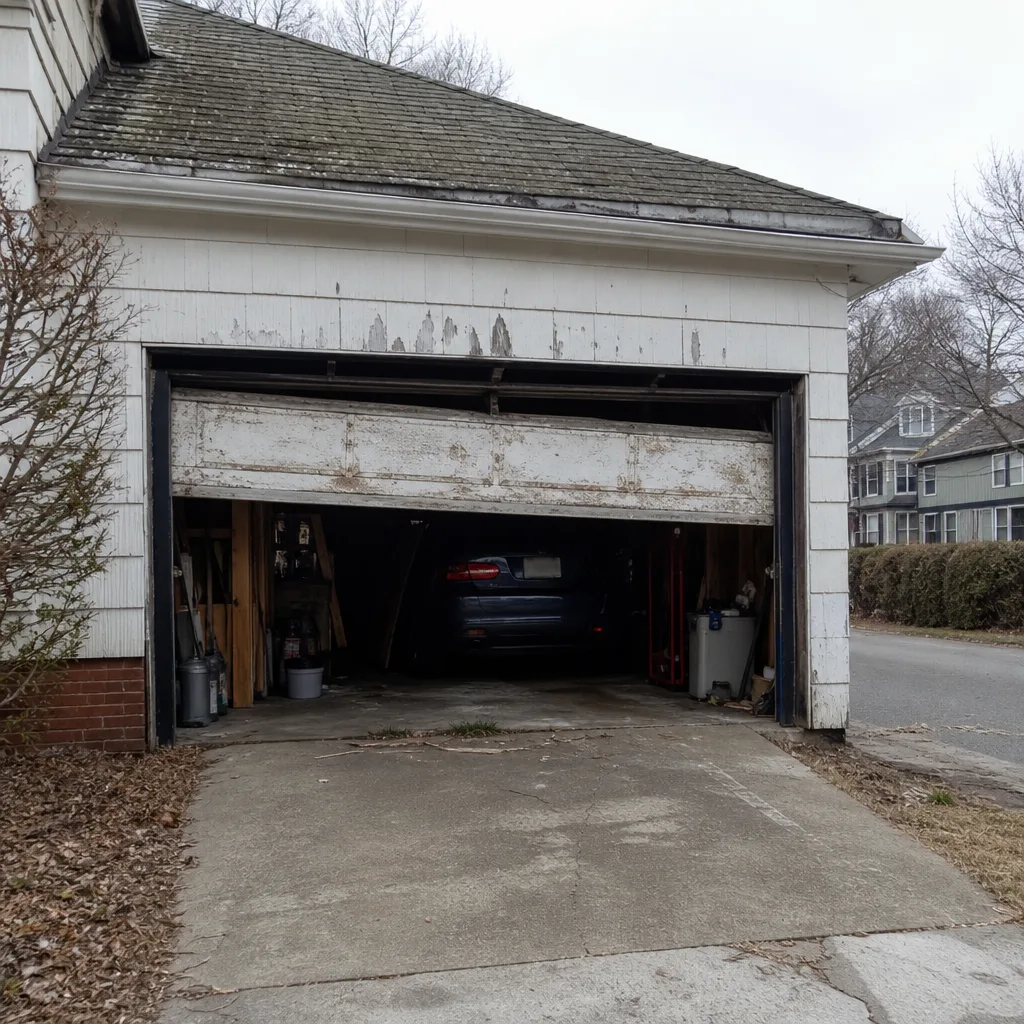 Before
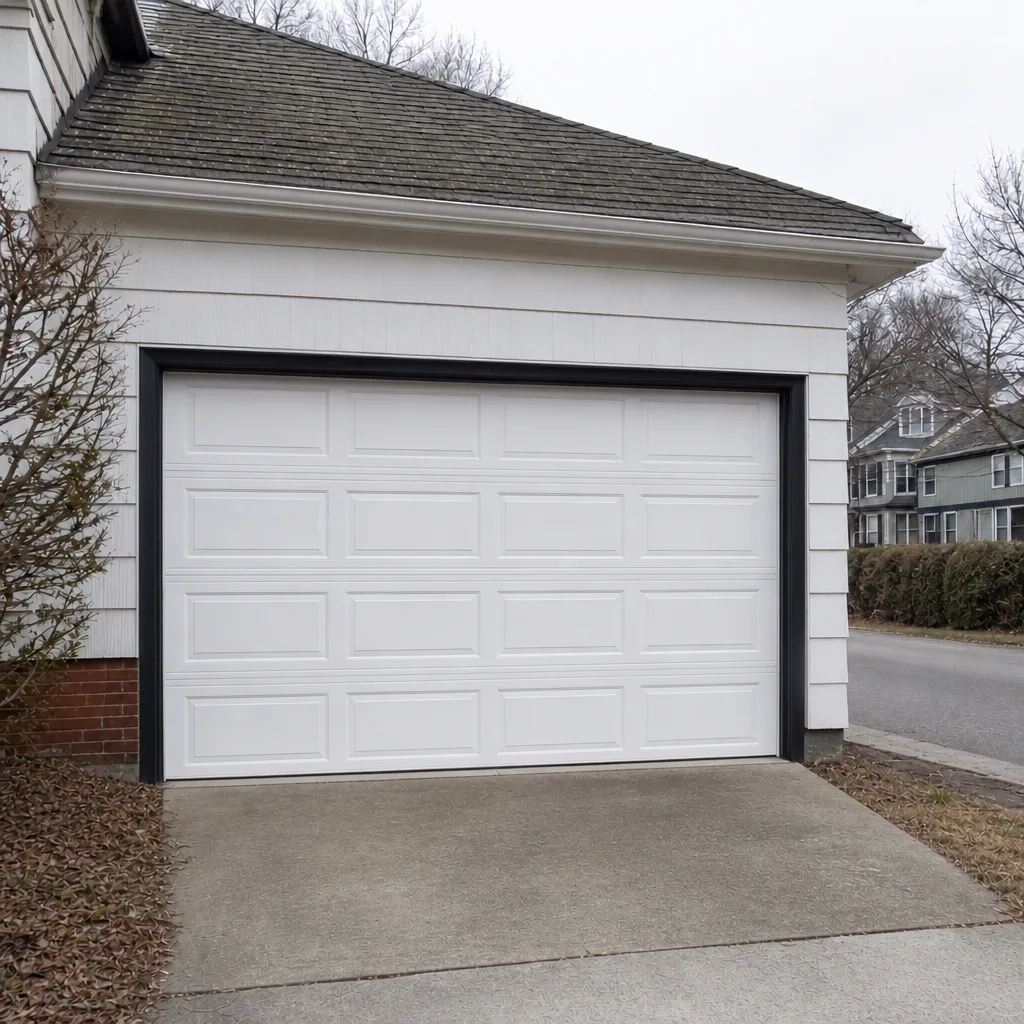 After
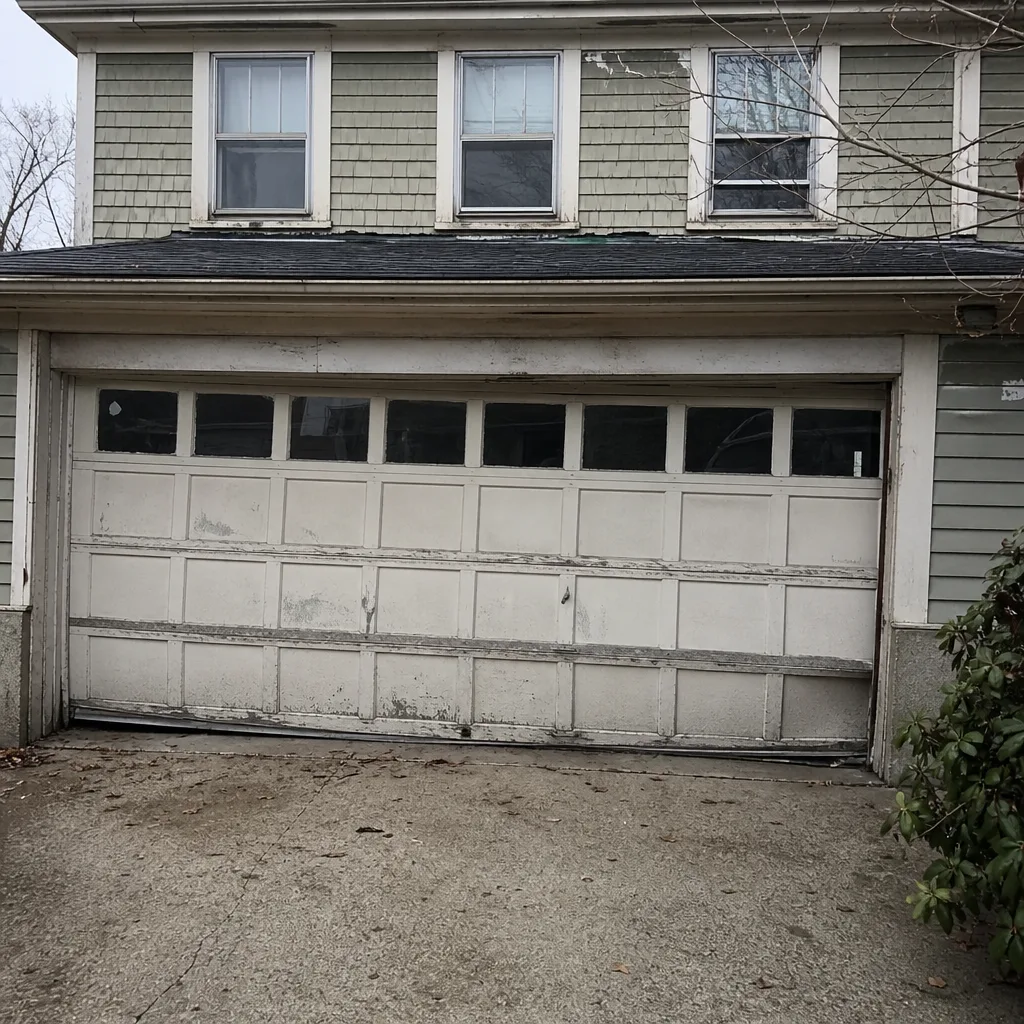 Before
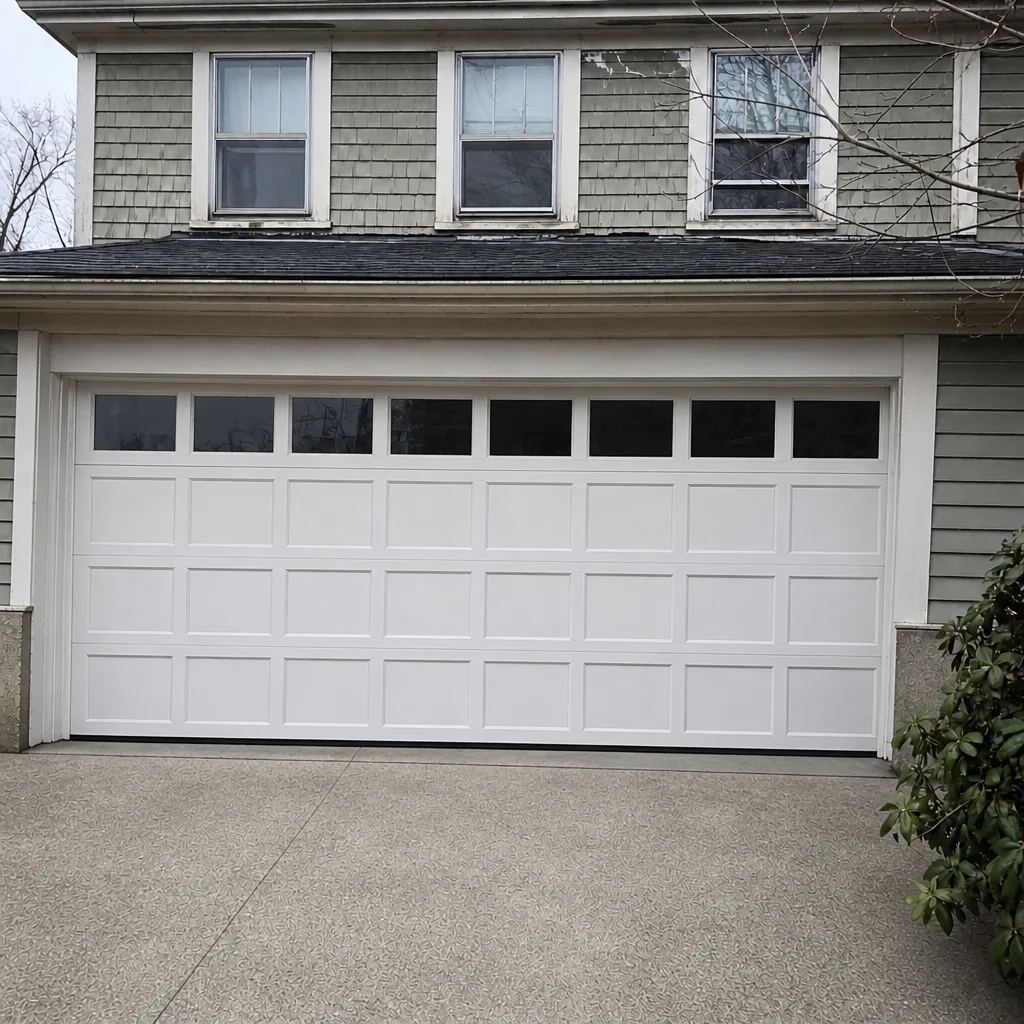 After
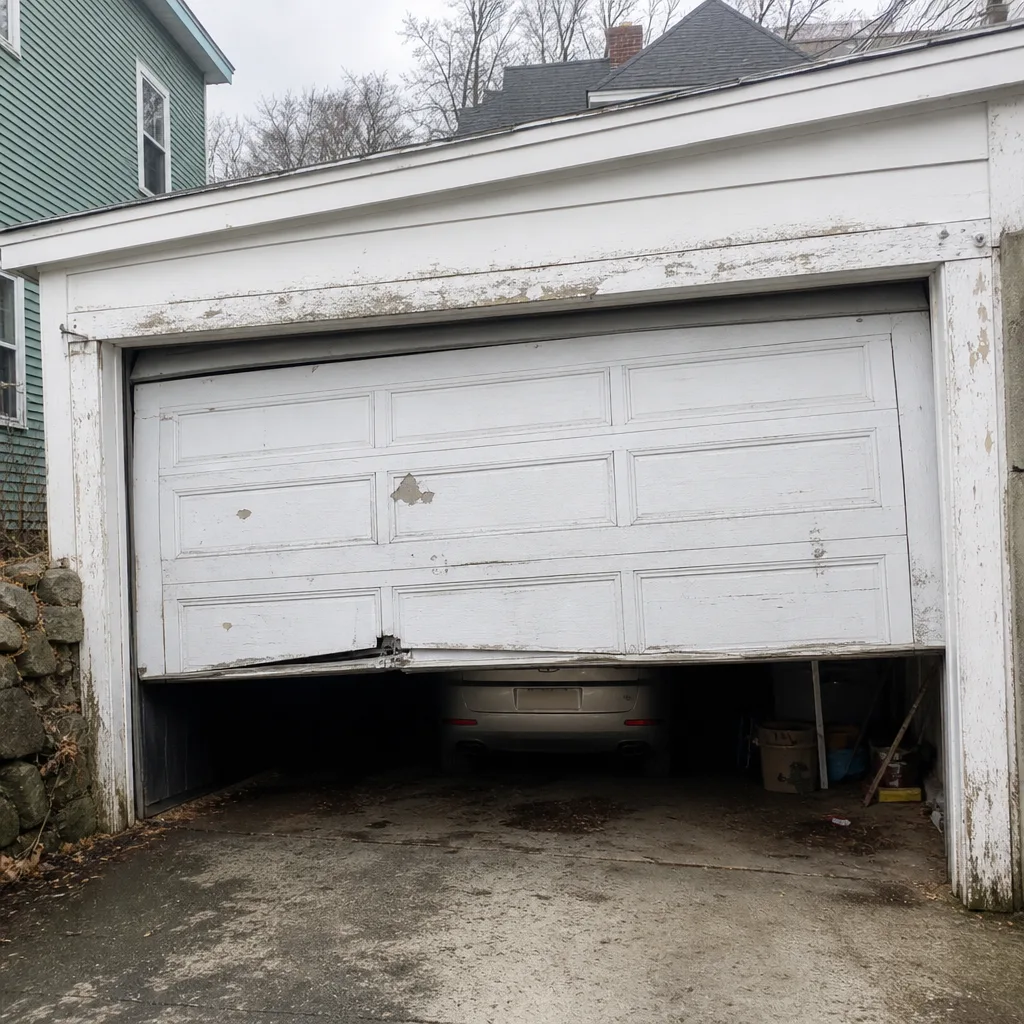 Before
 After
When to Call a Professional
Call a specialist if a spring has visibly failed, if the door reverses on close and won’t complete the cycle after sensors are cleared, if the door tilts or travels unevenly, if a cable has snapped, or if rot or rust has compromised the door’s structure. Call also if the opener hums without moving, if grinding appears during travel, or if the door feels heavy on manual lift. Any of these could mean the door is one cycle away from a bigger failure.
Garage Door Repair Jamaica Plain offers free estimates in Jamaica Plain – call (833) 468-3616. We answer 24/7 and offer fast dispatch from 7am to 7pm, Sunday through Friday. Our technicians have up to 9 years of experience working on the brand you already own, from Clopay and Amarr steel doors to Wayne Dalton wood-look panels and LiftMaster openers.
When we come out, we diagnose what’s actually failing, then quote the work in writing before anything starts. The written estimate sets the price – no surprises when the job is done.
Frequently Asked Questions
The most common warning signs are a gap in a torsion spring, a door that feels heavy on manual lift, a loud bang followed by the door not opening, slow opener travel, a door that reverses on close, grinding during travel, and rust or rot at the base of the door. Each one points to a specific component, and the guide above sorts them by urgency. Call (833) 468-3616 if you’re not sure which applies to your door.
A loud bang from the garage is almost always a torsion spring breaking. The bang is the spring releasing its stored energy, and the door usually won’t open afterward because the opener can’t lift the door’s weight alone. Stop using the door and call a professional. Call (833) 468-3616. We answer 24/7 and can book the next opening Sunday through Friday.
A broken spring shows a visible gap or split in the coil. A weak spring shows no visible gap, but the door feels heavy when you disconnect the opener and lift it by hand and it won’t stay where you leave it. A broken spring is a stop-use-now situation. A weak spring is a schedule-service-soon situation. Either way, call (833) 468-3616 for a free estimate.
It’s usually an opener problem if the motor sounds smooth and the door still drags. It’s usually a door problem if the motor sounds labored or if the door itself has become heavier because of a weakening spring, a binding track, or a stiff seal. The way to tell is to listen carefully during the cycle. A technician can diagnose it on-site – call (833) 468-3616.
A door reversing on close isn’t normal operation, but it isn’t always serious. If a safety sensor is misaligned or blocked, the door will reverse on purpose. If the sensors are clear and it still reverses, the issue is usually a mechanical bind. Either way, don’t ignore it. Call (833) 468-3616 and we’ll take a look, free estimate included.
The main signs are rust near the bottom of the panels, rust on the vertical tracks near the floor, wood rot in the jamb trim or bottom panel, and a bottom seal that’s gone flat or shows a visible light gap from inside. Grading that slopes toward the door rather than away accelerates all of these. Call (833) 468-3616 if you’ve found any of them.
No. We quote the price in writing after we’ve diagnosed the problem, and that written estimate sets the price. If we find additional issues during the repair, we’ll talk to you before doing anything beyond the original quote. Call (833) 468-3616 for a free estimate.
We connect you with local professionals who are licensed and insured as their state requires. Our technicians have up to 9 years of experience working on the brand you already own, from Genie and LiftMaster openers to Clopay, Amarr, and Wayne Dalton doors. Call (833) 468-3616 with any questions.
The Bottom Line
Garage door warning signs are always visible, audible, or behavioral – they don’t hide. What homeowners miss is the meaning. A gap in a torsion coil, a bang followed by silence, a heavy manual lift, a door that reverses on close, grinding during travel, or rot at the base of the panels all say something specific about which component is failing and how urgent it is. In Jamaica Plain’s older garages, moisture damage and rust patterns are the signs most often missed. Sort what you notice into the urgency tiers above, stop using the door on anything in the top tier, and call for a look when the door is telling you something. Our technicians have up to 9 years of experience, and we work on the brand you already own – from a broken spring to a full new door. Call (833) 468-3616 for a free estimate in Jamaica Plain.
Written by the team at Garage Door Repair Jamaica Plain.