
Last updated November 21, 2026
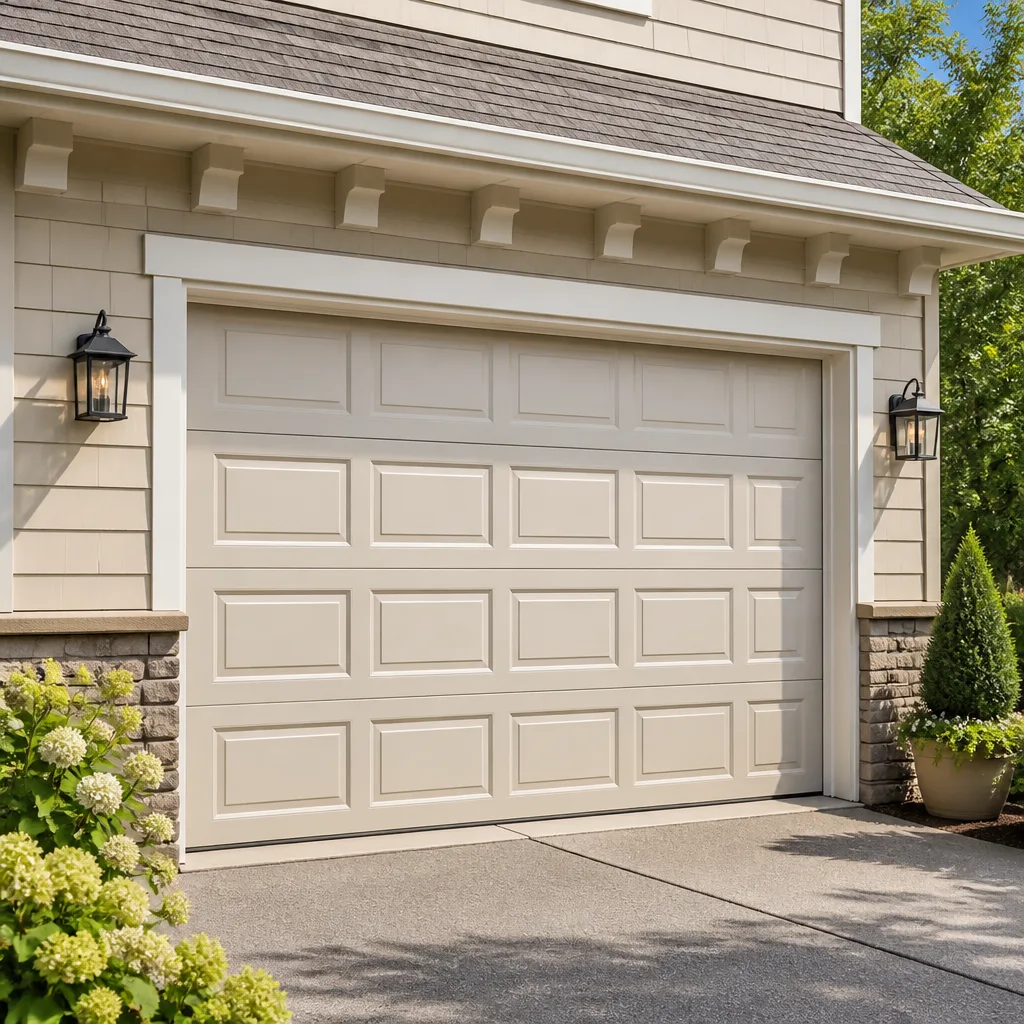 Raised-panel steel
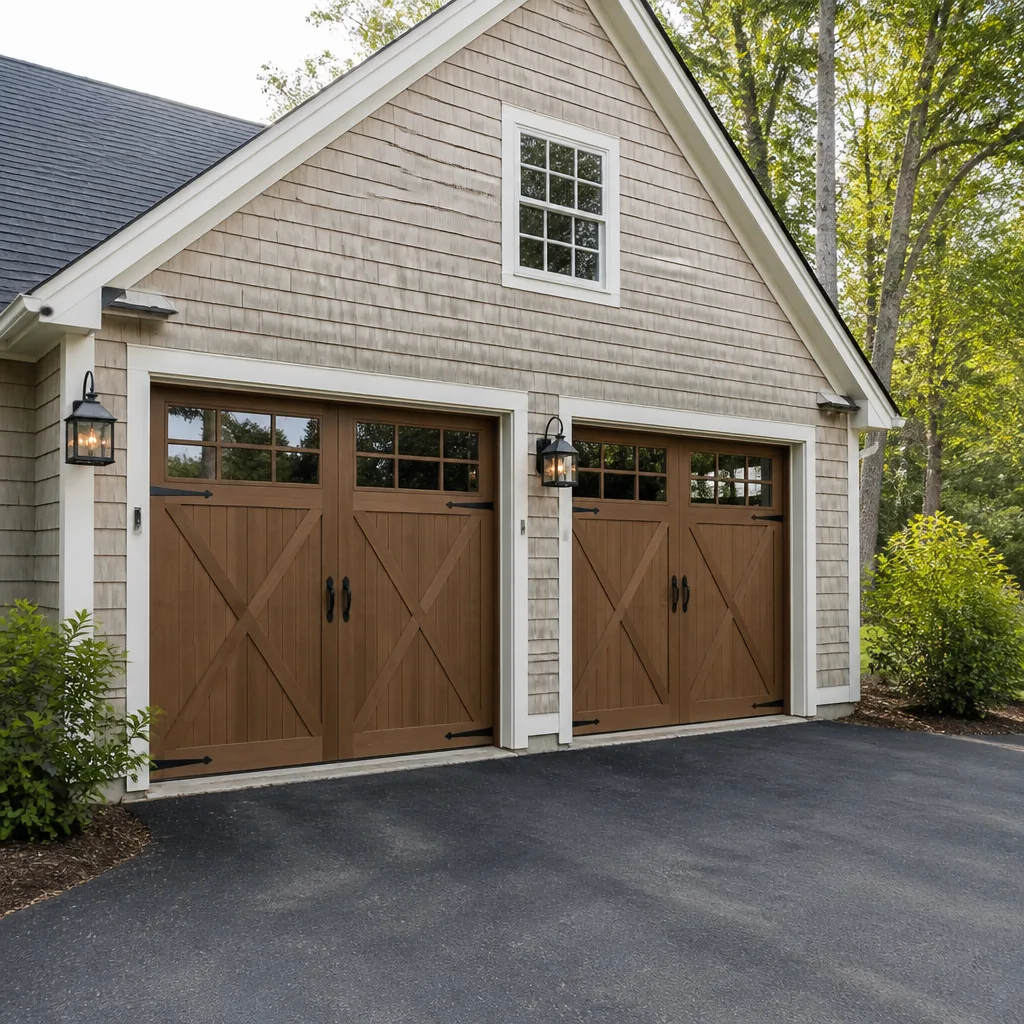 Carriage house
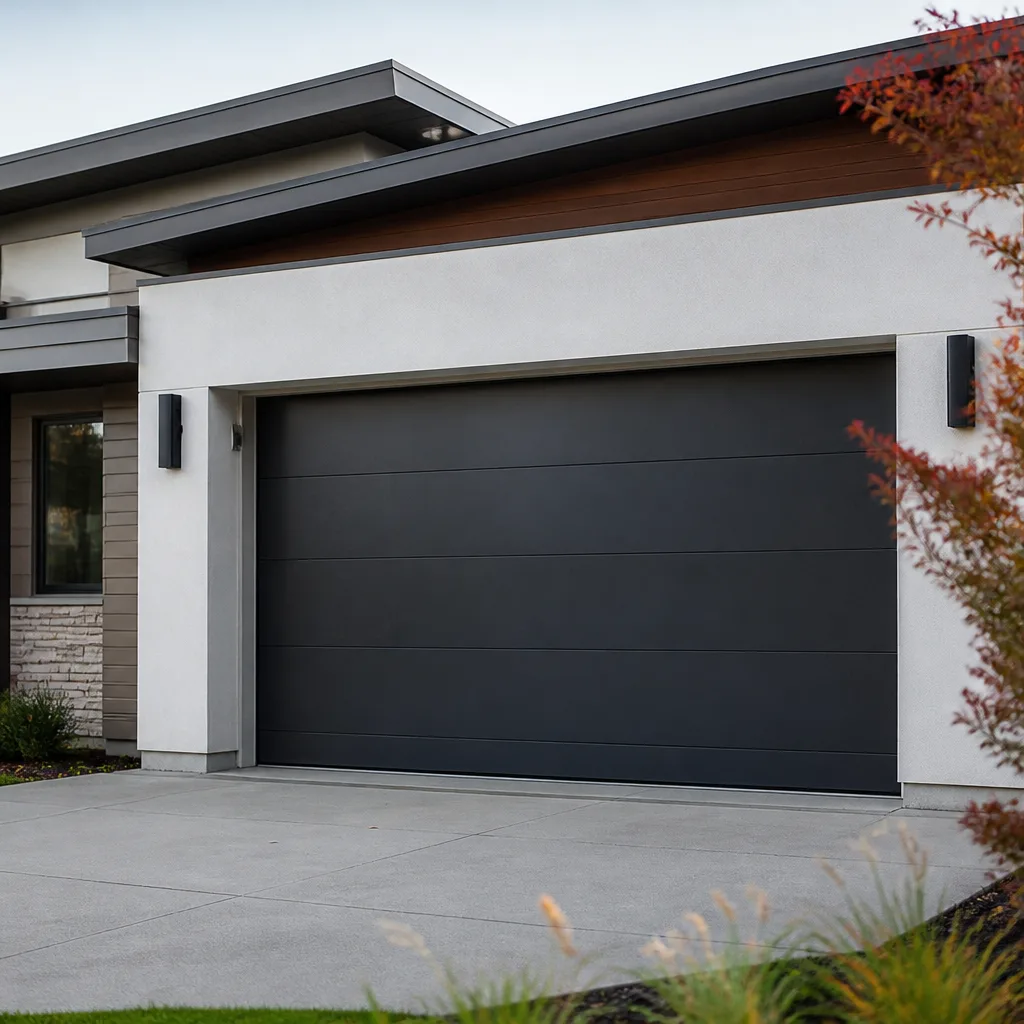 Modern flush
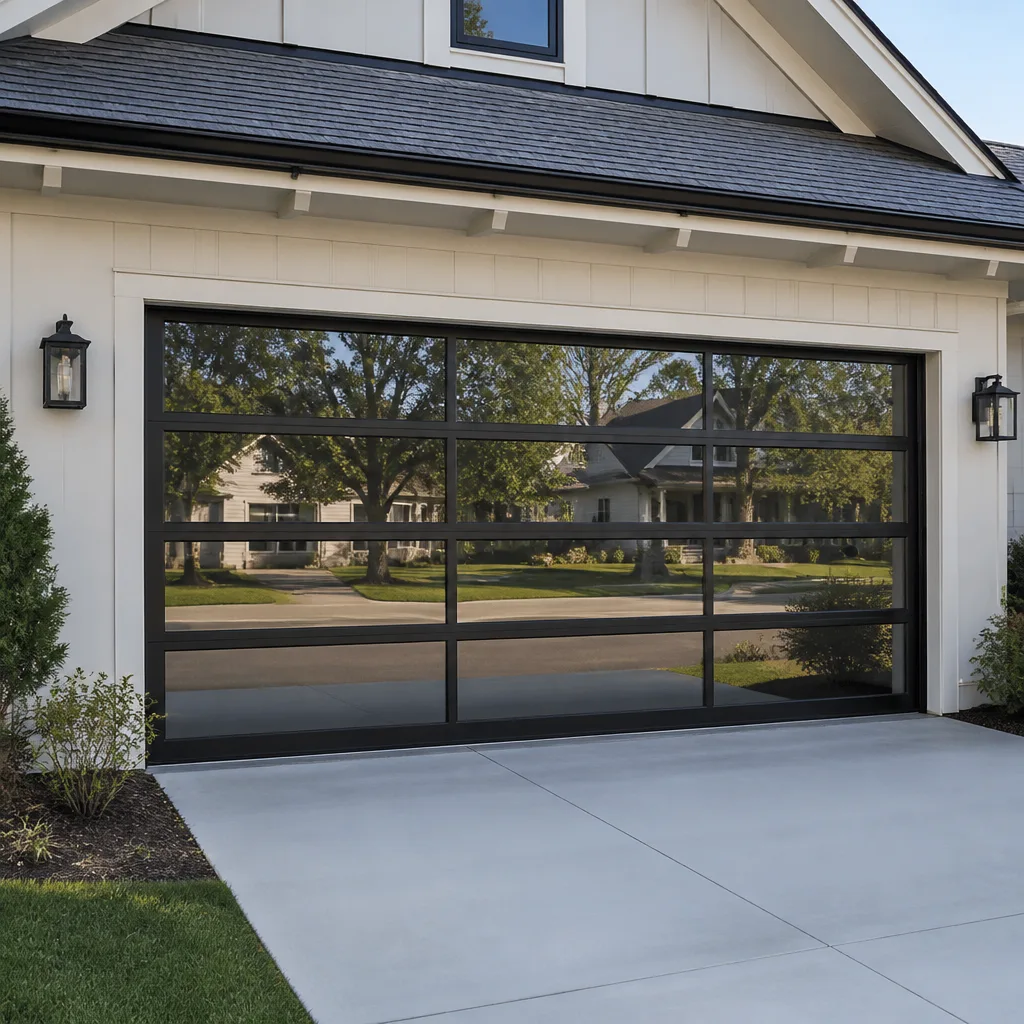 Full-view glass
 LiftMaster openers
 Chamberlain openers
Full 25-point door and opener safety check with every visit - springs, cables, rollers, tracks, and your LiftMaster or Chamberlain opener included
You get a price before we start. It does not change when the pro arrives.
Get your free estimateDIY vs Professional Garage Door: The Jamaica Plain Homeowner’s Decision Guide
Most homeowners frame this as a confidence question: am I handy enough to fix my own garage door? That’s the wrong frame. The real question is which specific tasks carry an asymmetric risk, where a small mistake has an outsized consequence. A torsion spring holding a 200-pound door under tension stores energy you cannot see, cannot slow down, and cannot stop once it releases. Meanwhile, replacing a bottom weather seal is genuinely learnable in a half hour. This guide draws the line between those two realities for Jamaica Plain homeowners, with the mechanical reasoning behind each one.
Quick Answer
Never DIY torsion spring replacement, cable replacement on a door under tension, or any work on the header and structural framing above the door. Those tasks can maim or kill, and they require specific tooling and technique to do safely. Do DIY lubrication, weather seal replacement, photo-eye alignment, and remote reprogramming. Everything in between, like roller swaps and track adjustments, depends on the condition of your specific door and frame, which in Jamaica Plain often means older, non-standard hardware.
Styles & brands we work with
- Raised-panel steel
- Carriage house
- Modern flush
- Full-view glass
- LiftMaster openers
- Chamberlain openers
Table of Contents
- The Line Between Safe DIY and Dangerous DIY
- Why Torsion Springs and Cables Are Off the Table
- What You Can Genuinely Do Yourself
- The Jamaica Plain Complication: Older Garages, Odd Dimensions
- The Cost-Benefit Reality Check
- The Smart Partial DIY Approach
- Opener Work: Where DIY Usually Stops
- Common Mistakes to Avoid
The Line Between Safe DIY and Dangerous DIY
Garage doors fail in two very different ways. Some components wear out slowly and fail gracefully: a weather seal tears, a roller grinds, a remote stops pairing. Others store enormous energy and fail violently. The distinction matters because the second category doesn’t care how careful you are or how many videos you watched. It cares whether the spring was wound the correct number of turns, whether the bar was seated fully, and whether you were standing in the right place when it moved.
We draw a hard line at three categories of work:
- Torsion spring replacement. A fully wound torsion spring holds enough stored energy to do serious injury in a fraction of a second. The winding process requires two properly sized bars, an understanding of how many turns your specific door needs, and the knowledge to keep your body out of the release path. This is the single most dangerous routine job in the trade.
- Cable replacement under tension. Cables run along the sides of the door and work with the springs to lift it. A cable under load can whip when released, and a cable that snaps while the door is up can drop the door. There is no safe way to replace one on a door that is still under spring tension.
- Header and structural framing work. The framing above the door carries the weight of the whole assembly. Any change to that framing, including widening a rough opening or repairing rot in the header, affects the door’s safety and usually the structure of the wall. This is contractor territory, not weekend territory.
Every other task falls on a spectrum, and where it lands depends on the specific door in front of you. In our experience working across Jamaica Plain, the older housing stock pushes more “simple” jobs toward the professional side than a homeowner expects. A roller that swaps in five minutes on a modern door can take an hour when the track brackets are seized or the original hardware is a size that isn’t sold anymore.
Why Torsion Springs and Cables Are Off the Table
The reason a torsion spring deserves this much caution is physics, not drama. A wound spring is a stored-energy device. Winding it tighter to lift a heavy door stores more energy, and the spring holds that energy for years without complaint. When it fails, whether from metal fatigue, corrosion, or a slipped winding bar, it releases all of that force at once. The sound is often described as a gunshot. The metal can travel. That’s why a professional doesn’t just bring stronger hands, they bring a defined process.
A proper torsion spring job involves:
- Confirming the door’s weight and measuring the existing spring wire size and length, because a spring chosen by guesswork will fail early or leave the door unbalanced.
- Locking the door in the fully closed position with the correct winding bars and vice grips so nothing moves while the spring is off.
- Removing the old spring and inspecting the center bearing plate, the winding cones, and the cable drums for wear that would make a new spring unsafe.
- Winding the new spring the correct number of turns for the door’s height, which takes feel and experience to get right.
- Testing the balance by hand and adjusting the tension until the door holds position at the halfway point.
Cables are the same story. A cable carries the door’s weight on each side. If it comes free under load, the door drops on one side at minimum and can come completely off the tracks at worst. Nobody should be tugging on a loaded cable in a garage in Jamaica Plain or anywhere else. Our technicians have up to 9 years of experience with these jobs, and even they don’t shortcut the lockout.
What You Can Genuinely Do Yourself
Plenty of garage door maintenance is well within reach for a homeowner with a step ladder and an afternoon. Here’s the honest list, with actual steps.
Lubrication
Do this twice a year. Use a garage door lubricant or white lithium grease, not WD-40, on the hinges, the rollers (at the bearing, not the wheel), the springs, and the track where the rollers ride. Wipe away excess so it doesn’t attract grit. This one task postpones more repairs than any other single habit.
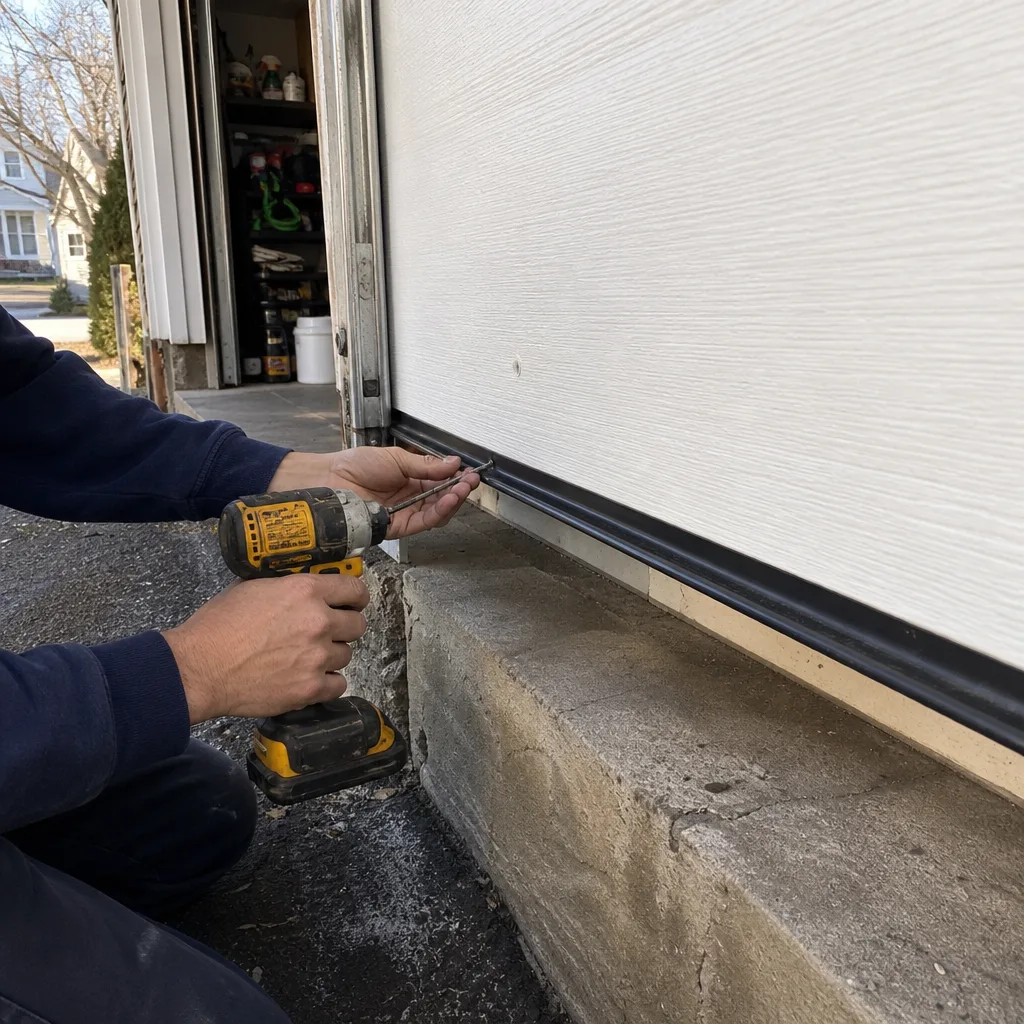
Weather Seal Replacement
- Close the door fully and look for light coming under the bottom seal. That gap is your guide.
- Pull the old seal out of the aluminum retainer at the bottom of the door, or unscrew the retainer if it’s the type that holds the seal in a channel.
- Cut the new seal to length with a utility knife, allowing a little extra at each end.
- Slide it into the retainer or screw the retainer back on, then close the door and check for even contact across the floor.
Photo-Eye Alignment
Garage door openers have two small sensors at the base of the door that stop and reverse the door if something crosses the beam. If your door reverses for no reason, one is probably misaligned. Loosen the bracket, aim the sensor at its partner until the indicator light on it goes solid, then tighten. That’s the whole job.
Remote Reprogramming
If your opener is a LiftMaster, Chamberlain, Genie, or Craftsman, the manual covers this in a couple of pages. Typically you press the learn button on the opener, then hold the button on the remote until the opener responds. It’s fiddly, not dangerous, and worth trying before you call anybody.
The Jamaica Plain Complication: Older Garages, Odd Dimensions
Jamaica Plain has a lot of older garages, detached and attached, and they come with quirks that make “simple” DIY jobs harder than they look. A door frame that was built decades ago may have settled. Wood framing around the opening may be soft from years of moisture. Original hardware may be a size that isn’t stocked at the local hardware store anymore. You go in assuming a fifteen-minute seal replacement and find the retainer is corroded onto the door, the bottom panel is bowed, and the whole seal won’t sit flat.
Non-standard dimensions are the other trap. A door that’s an odd width or height might have been a custom order decades ago, and the parts that fit it aren’t the parts that fit a modern standard door. This matters most when a homeowner tries to replace a single roller or a hinge bracket and finds the replacement doesn’t seat the same way. We see this regularly, and it’s not a skill problem. It’s a fit problem.
The weather in this part of Massachusetts is the other factor. Deep freezes followed by thaws cause wood frames to swell and contract, which throws alignment off seasonally. A door that ran perfectly in October might squeal and bind in February because the frame has moved. That’s normal, but it means maintenance needs to be seasonal rather than an annual afterthought.
The Cost-Benefit Reality Check
Here’s the honest math. What you save by DIYing a task is the labor cost, but the downside risk is what you pay if you damage something that then needs professional repair. A DIY attempt on a spring that goes wrong isn’t a small overrun. It’s a hospital visit plus a door that’s now in pieces.
A reasonable way to think about it, without pretending we can quote every scenario:
- Lubrication, seal replacement, remote pairing, sensor alignment: genuinely low financial downside. Do them yourself.
- Roller and hinge swaps on modern standard doors: modest downside if a track bracket strip happens (it can). Worth trying with the right tools.
- Roller and hinge swaps on older non-standard doors: higher risk that a stripped drum or bent bracket pushes the job to a pro anyway. This is where the savings disappear.
- Spring, cable, header, and panel replacement: the downside is not financial, it’s physical. Skip the DIY entirely.
There’s also the “undoing your work” tax. If a homeowner partially disassembles a door and calls us in, we still have to diagnose the original problem and evaluate whether the disassembly made anything worse. That can legitimately cost more than calling first would have. It’s not a punitive charge, it’s just the reality of the diagnostic work. The written estimate always sets the final price, and we quote and agree it before any work starts, so there are no surprises on that front.
The Smart Partial DIY Approach
The most economical approach is neither full DIY nor full professional. It’s a split: you do the low-risk, time-consuming parts yourself, and a specialist handles the high-risk component.
Here’s what that looks like in practice:
- You clear the garage. Move cars out, clear the floor area around the door, and remove anything hanging near the tracks. This alone saves the technician time on arrival.
- You do the visible maintenance. Lubricate, replace the weather seal, align the sensors, replace worn rollers that you can reach safely with the door closed.
- A specialist handles the spring or cable work. Because the risk is the point, and the cost of getting it wrong is not worth saving an hour of labor.
- You clean up after. Nobody charges extra for the parts you already sorted and labeled.
This approach reduces the total bill without compromising safety. It also gives you a chance to look your door over with fresh eyes and identify what actually needs attention. And it means the specialist can focus on the part that requires real expertise, which is exactly what specialized garage door repair should be. If you’ve got a spring that’s clearly collapsed or a door that no longer balances, that’s a call, not a project.
Opener Work: Where DIY Usually Stops
Openers are their own category. Some tasks are easy and safe, some aren’t. Replacing a battery in the wall console, re-pairing a remote, or repositioning a sensor are all fine. Replacing the entire opener unit is a different job. The opener is bolted to the ceiling, connected to the door’s springs and cables, and its rail tension and travel limits have to be set correctly or the door will reverse incorrectly or force itself onto the floor.
Where DIY misses the mark most often with openers is diagnosis. A door that won’t close could be a sensor issue, a travel limit problem, a stripped gear, a bad capacitor, a logic board fault, or a spring that has lost tension. The visible symptom is the same. Homeowners frequently replace an opener that was fine and find the actual problem was a misaligned photo eye or a worn spring. If you’re dealing with opener trouble and you’ve already tried the basic pairing and alignment steps, it’s time for garage door opener repair by someone who services LiftMaster, Chamberlain, Genie, and Craftsman equipment every week. We work on the brand you already own instead of pitching a new unit you don’t need.
For a door that’s older and has been patched repeatedly, or one where the panels are separating and the hardware is at end of life, garage door installation is usually a better investment than another round of repairs. That’s a scheduled job with a free measure and a written price, not a same-day one.
Common Mistakes to Avoid
- Winding a spring without the right bars. Screwdrivers and pliers are not winding bars. They slip. When they slip, the spring unwinds all at once. Never substitute tools on a wound spring, and never try to “just nudge” a spring back into place.
- Releasing cable tension without locking the door. If the door isn’t locked in place with vice grips before the cables come off, it will fall. The lockout is not optional and the correct placement depends on whether your door uses torsion or extension springs.
- Assuming old hardware is interchangeable. In Jamaica Plain’s older garages, brackets, drums, and rollers are frequently a non-standard size. Ordering the modern equivalent and forcing it in usually means a stripped bolt and a rougher-running door. Measure first.
- Lubricating the tracks with grease. Garage door tracks should stay dry. Grease on the track attracts grit, which wears rollers faster than no lubricant at all. Lubricate hinges, rollers, and springs; leave the track clean.
- Replacing a panel in an old door before confirming fit. Panel profiles changed across generations of Clopay, Amarr, and Wayne Dalton doors. If you order before checking the exact profile and dimensions against your specific door, you’ll have a panel that doesn’t seat, and it can’t be returned once it’s been cut or installed.
- Trying to DIY a spring “just this once” after watching videos. The videos rarely show the failure paths. They don’t show what happens when a winding bar slips, or when the spring has already been wound by somebody previously and the cone is embedded differently. That gap is where injuries happen.
- Waiting for a small problem to become a big one. A squeal, a rough spot, or a slight droop on one side is cheap to fix. Left alone, those symptoms become worn cables, damaged panels, or a door that comes off track. Jamaica Plain’s freeze-thaw cycle speeds that up.
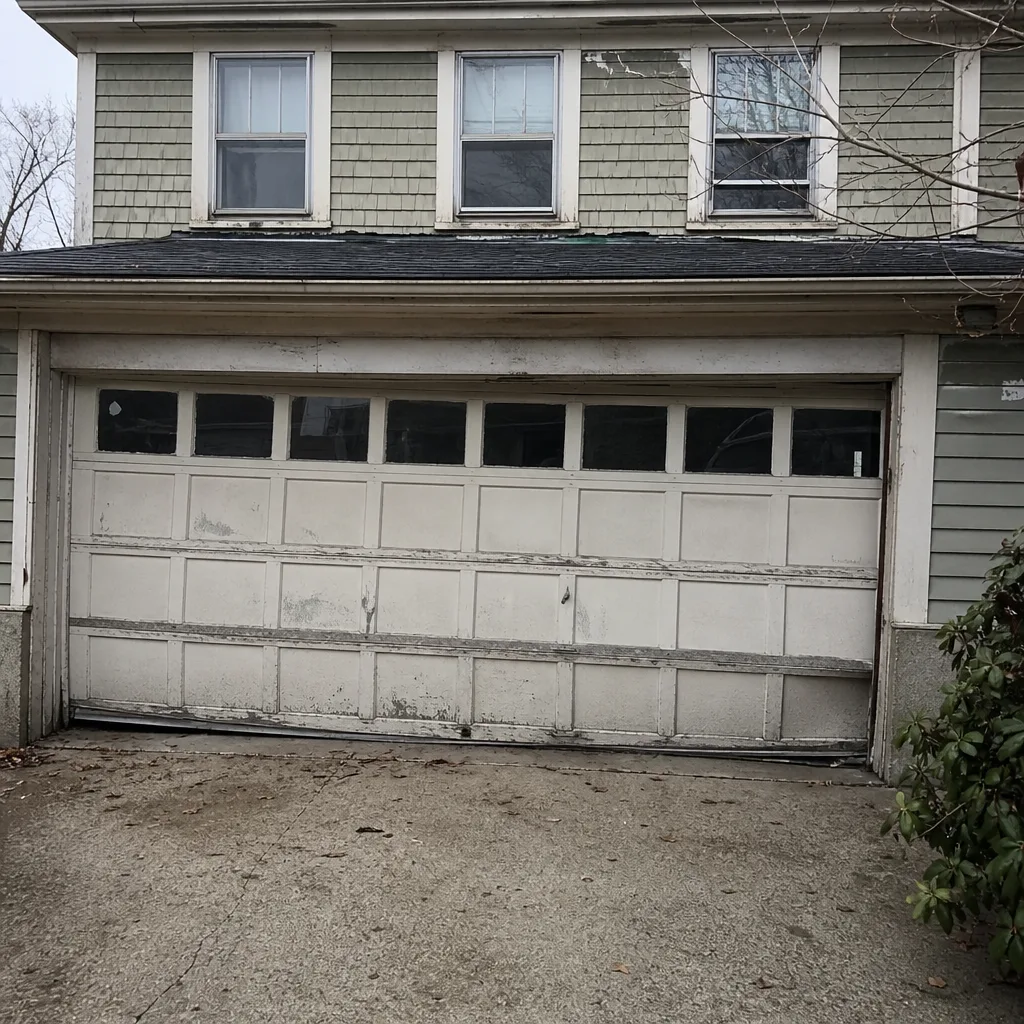
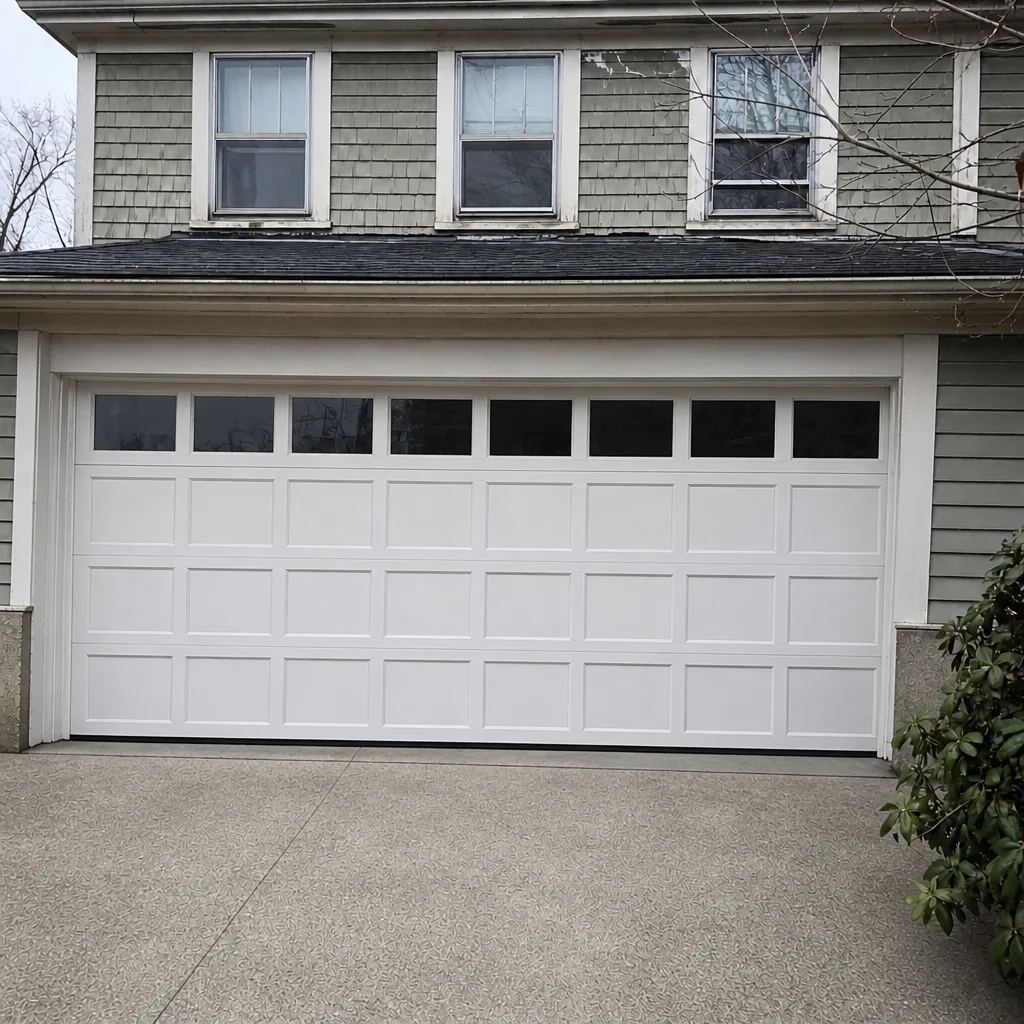
See the difference
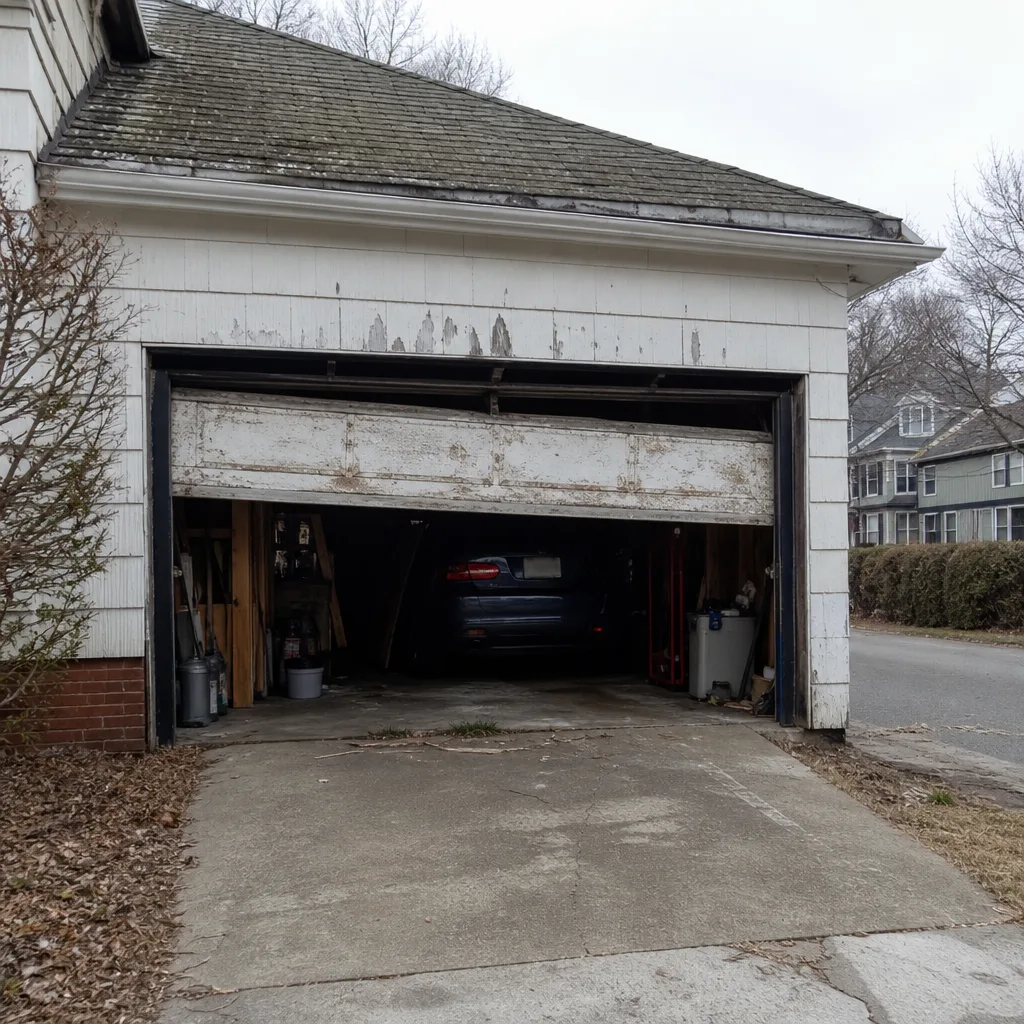 Before
 After
 Before
 After
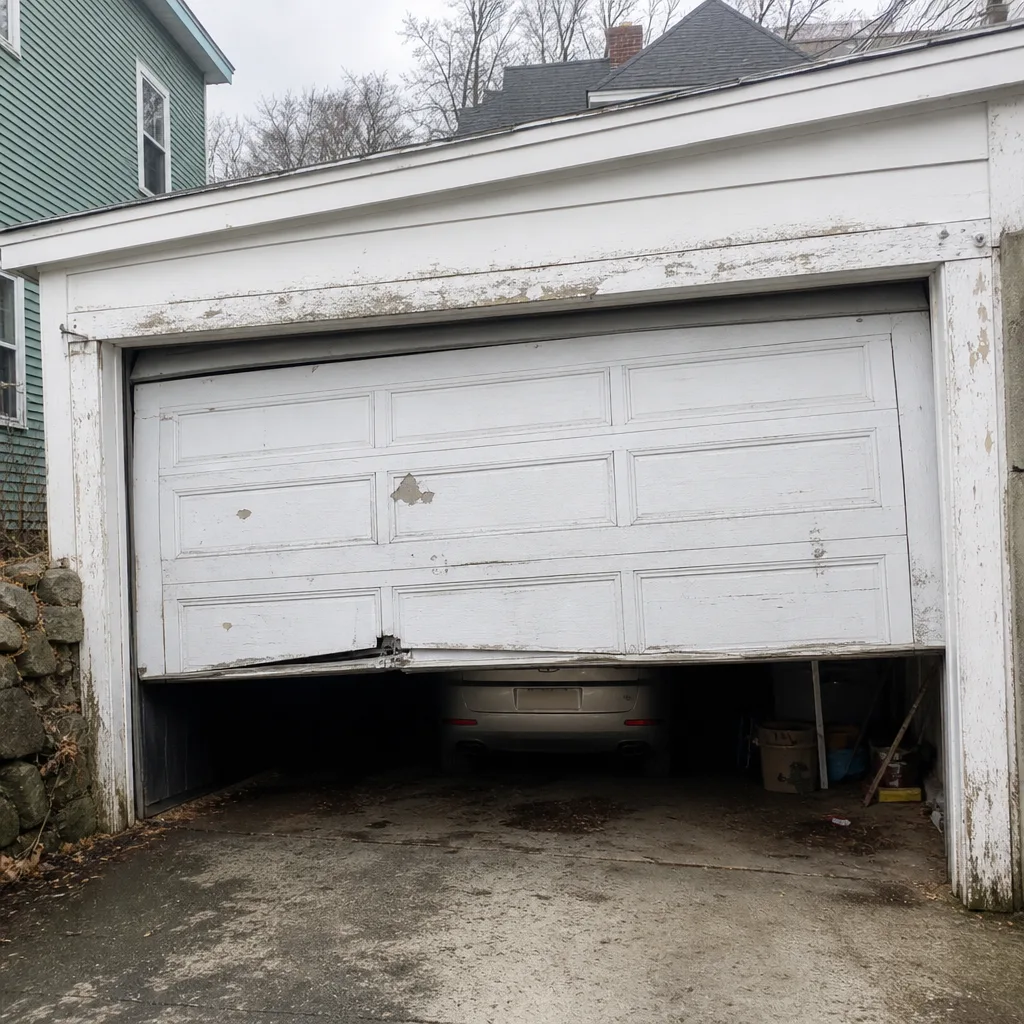 Before
 After
When to Call a Professional
Call a professional for anything involving springs, cables, structural framing, panel replacement, opener replacement, or a door that has come off track. Also call if a DIY attempt has left the door in a state where it won’t close fully, won’t open, or runs unevenly, because the diagnostic work is quicker than the trial-and-error fixing. If you’re not sure where a task lands, describing it to somebody who works on doors every day takes five minutes and saves you the guesswork. From a broken spring to a full new door, we can tell you which category you’re in.
Garage Door Repair Jamaica Plain offers free estimates in Jamaica Plain. Call (833) 468-3616. We answer 24/7. Fast dispatch from 7am to 7pm, Sunday through Friday. The price is quoted and agreed before any work starts.
Frequently Asked Questions
No, and we’d recommend against it no matter how handy you are. A wound torsion spring stores enough energy to cause serious injury if a winding bar slips or the spring releases unexpectedly. The job requires specific winding bars, knowledge of the correct number of turns for your door, and lockout technique. This is one of the most dangerous routine tasks in the trade, and it should be done by someone trained for it. If your spring has snapped, call (833) 468-3616 for a free estimate.
The price depends on the job. A simple seal or roller replacement is at the low end, a spring replacement is in the middle, and a full panel or opener replacement is at the high end. We set prices per job with a written estimate that’s agreed before any work starts, so you know the number before we touch the door. Estimates are free, and the written quote is what you’ll pay. Call (833) 468-3616 for an exact quote.
No. The written estimate is the price. We quote and agree it before work begins, and we don’t surprise homeowners with extra charges once the door is apart. If we find something during the job that wasn’t visible on the estimate, we stop and talk to you before doing anything that would change the price. That’s not a one-time courtesy, it’s how every job is handled.
Yes, often. Older Jamaica Plain garages frequently have non-standard dimensions, seized hardware, or framing that has moved with the seasons. A job that would be simple on a modern door can turn into a hardware hunt on an older one. Before you start any roller or hinge project yourself, measure your existing parts and confirm the replacement matches the profile and size.
For repair jobs, often yes. We dispatch technicians from 7am to 7pm, Sunday through Friday, and same-day service is available for most repair calls. Calls outside dispatch hours are booked into the next opening. Installation and full door replacement are scheduled jobs that begin with a free measure and a written price. Call (833) 468-3616 to find out what’s available for your door. We answer 24/7.
The local professionals we connect you with are licensed and insured as required by their state. They work on the major brands, including Clopay, Amarr, Wayne Dalton, and Craftsman, plus LiftMaster, Chamberlain, Genie, and Raynor for opener work. Our technicians have up to 9 years of experience with spring, cable, opener, and installation jobs. If you want to confirm specifics before your appointment, ask when you call (833) 468-3616 for a free estimate.
The Bottom Line
The DIY vs. professional question for garage doors is really a question about which tasks have a downside you can absorb. Lubrication, seals, remotes, and sensor alignment are low-stakes and genuinely learnable, and doing them yourself is a smart way to save on labor while keeping the door in good shape. Springs, cables, headers, and full panel replacement carry risk that no amount of confidence should override. For Jamaica Plain homeowners with older garages, the smartest path is usually a partial DIY: handle the easy maintenance yourself, clear the space, and bring in a specialist for the components where getting it wrong means a door falling. Start with a look at your Garage Door Repair Jamaica Plain options and a free estimate. Call (833) 468-3616. We answer 24/7. Fast dispatch from 7am to 7pm, Sunday through Friday.
Written by the team at Garage Door Repair Jamaica Plain.