
Last updated November 21, 2026
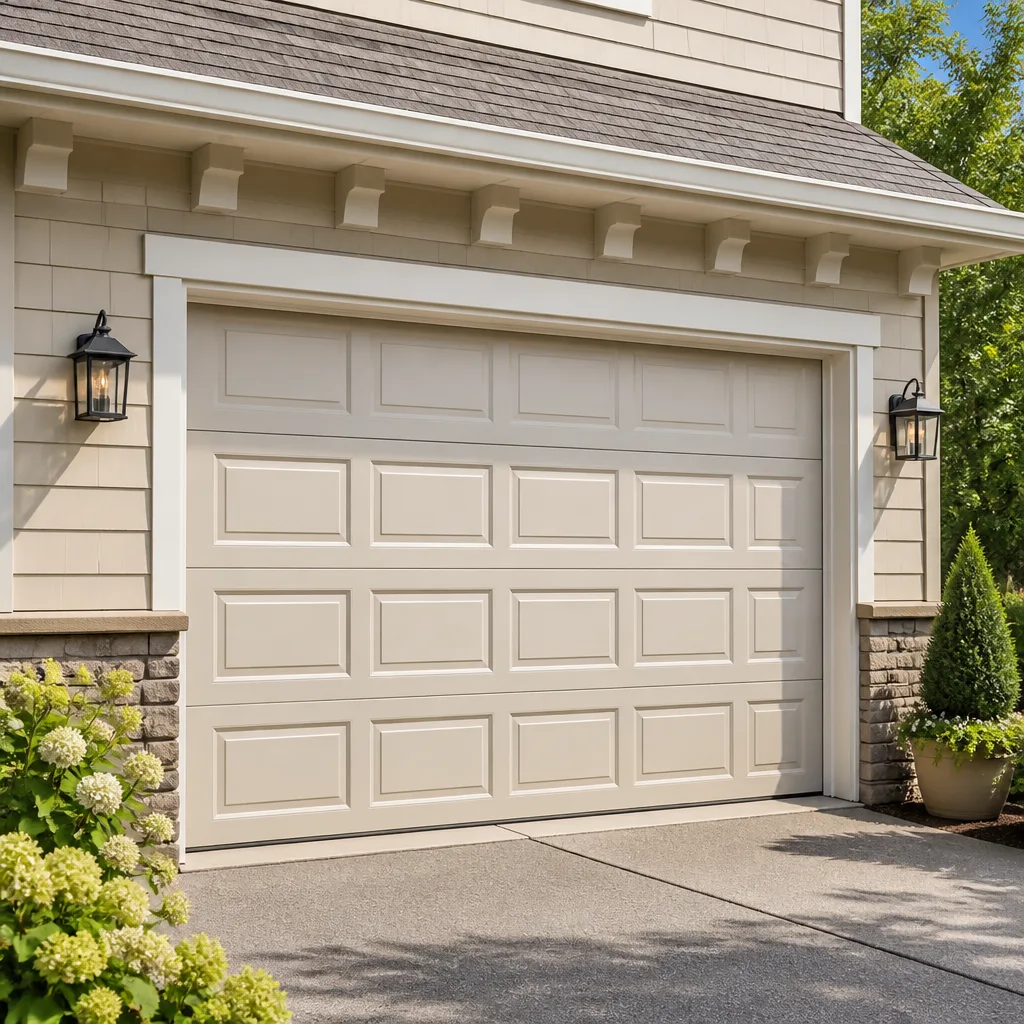 Raised-panel steel
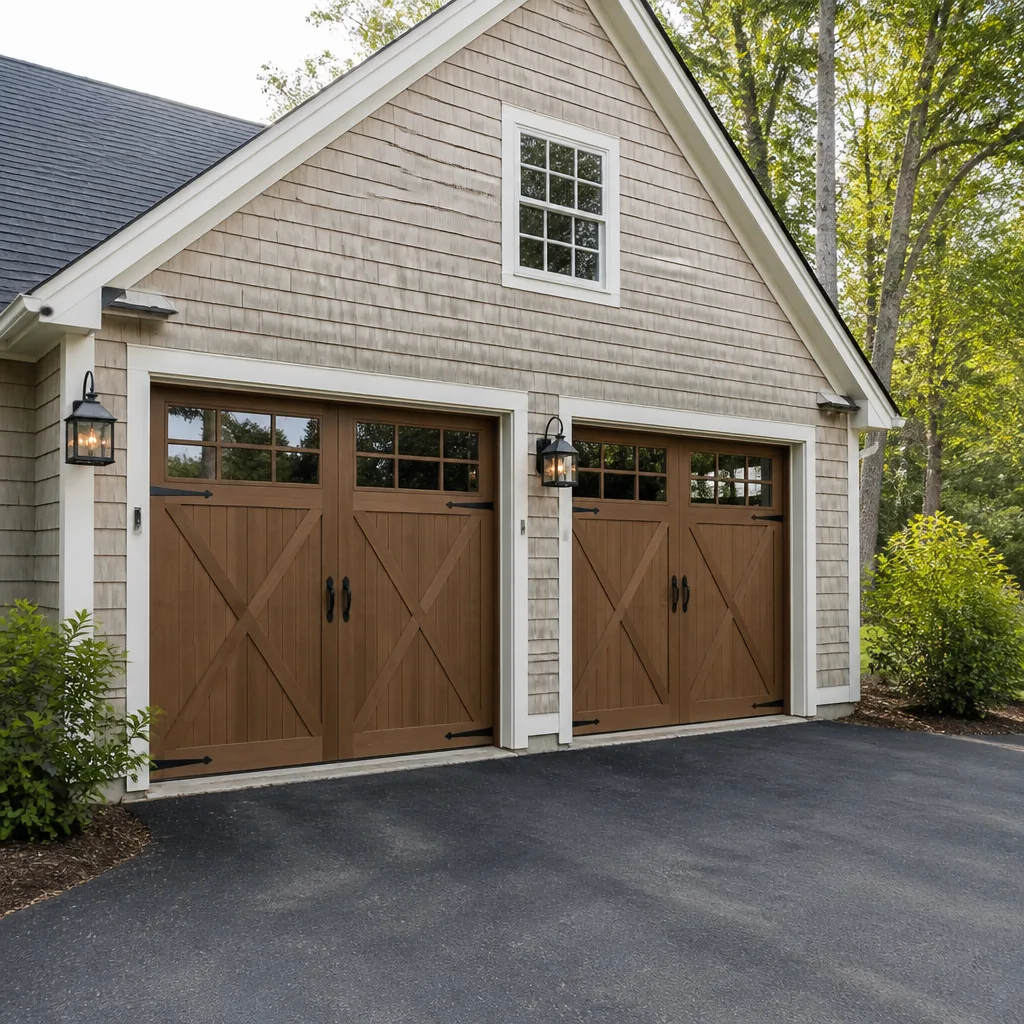 Carriage house
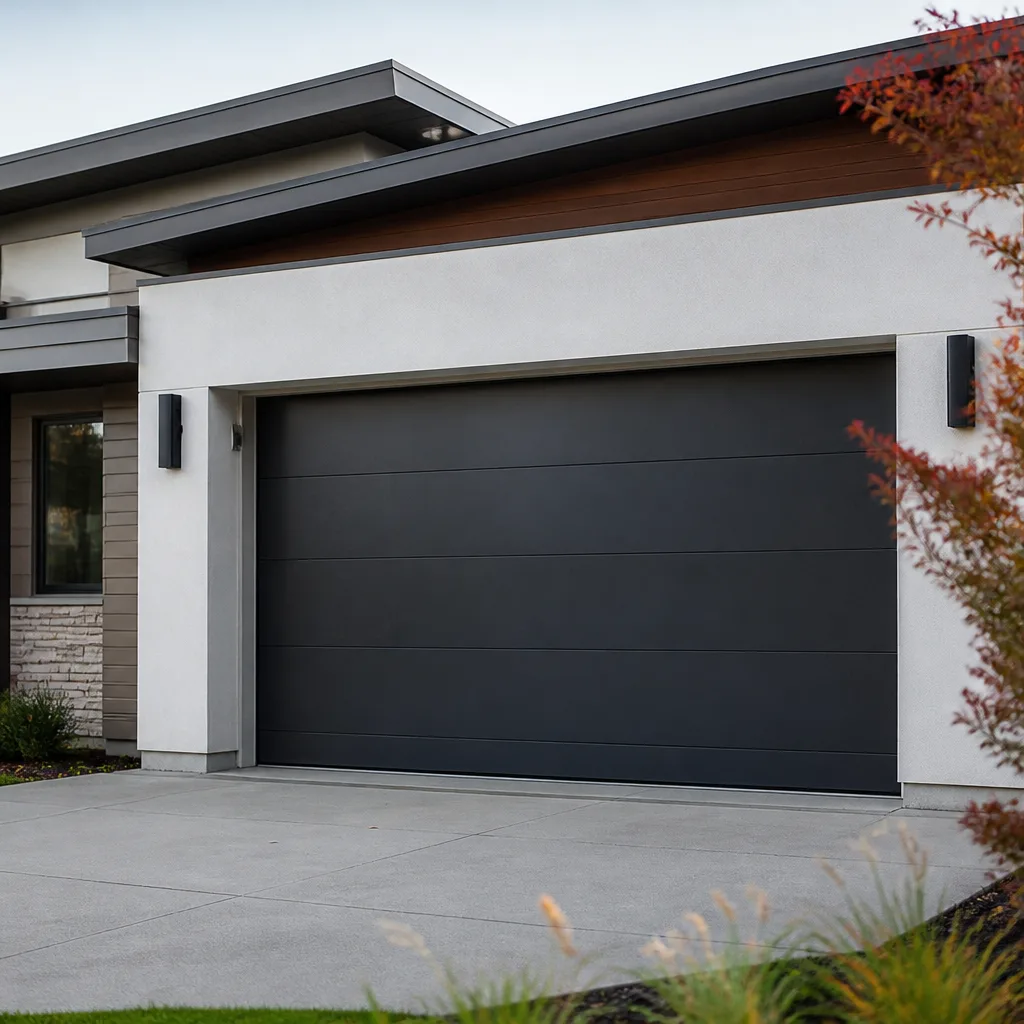 Modern flush
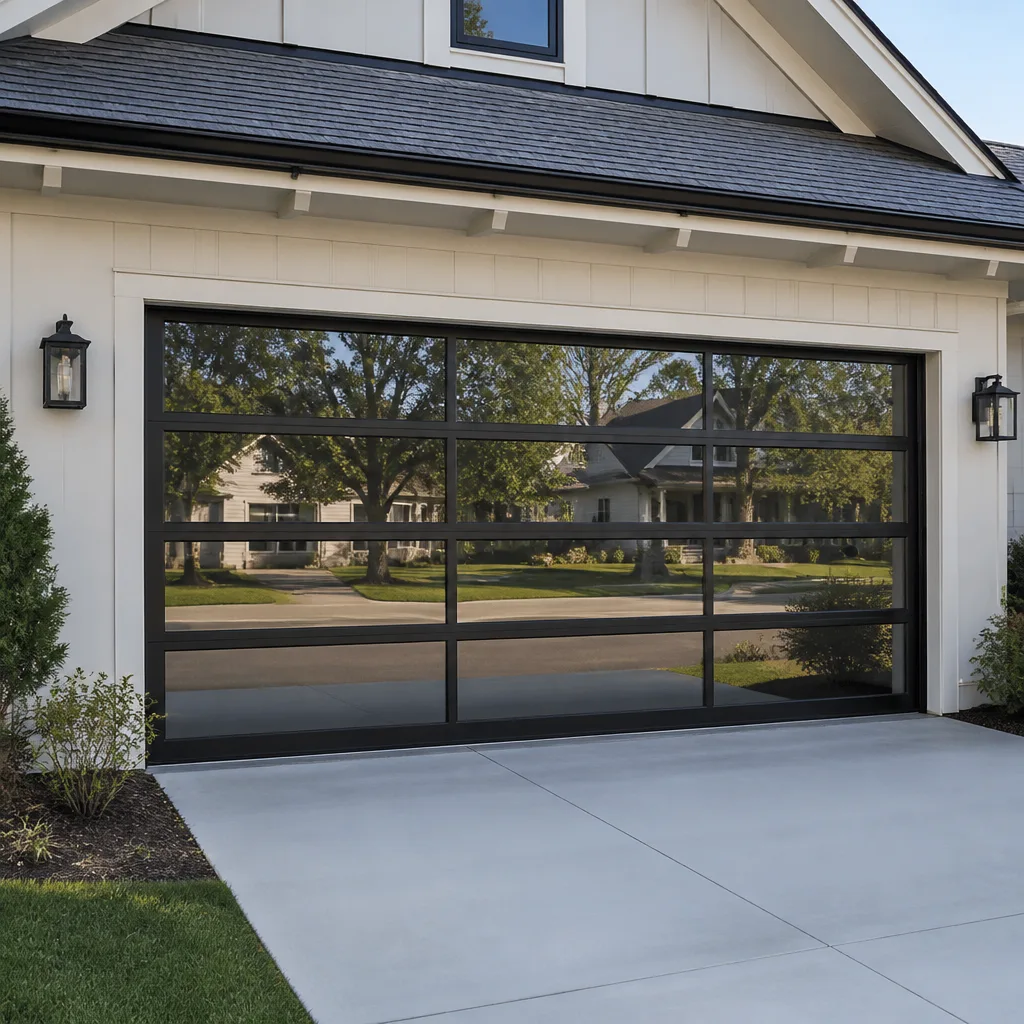 Full-view glass
 LiftMaster openers
 Chamberlain openers
Full 25-point door and opener safety check with every visit - springs, cables, rollers, tracks, and your LiftMaster or Chamberlain opener included
You get a price before we start. It does not change when the pro arrives.
Get your free estimateGarage Door Repair Maintenance Checklist for Jamaica Plain Homeowners
Most garage door failures in Jamaica Plain don’t arrive without warning. They announce themselves for months: a cable that’s started to fray, a spring that’s wearing a thin rind of rust, a bottom seal that’s gone stiff and cracked. Those warnings get walked past a dozen times because nobody ever told the homeowner what “not fine” actually looks like. That’s the problem with most checklists you’ll find online. They’re written for a climate and a housing stock that don’t match what’s standing behind so many JP garages, where a door built for a 1920s carriage house and one installed on a newer addition don’t fail the same way. This guide fixes that. You’ll get visual inspection criteria with real failure thresholds, a lubrication schedule that holds up through a New England winter, balance and safety tests you can run yourself, and a calendar keyed to Jamaica Plain’s actual seasons.
Quick Answer
A garage door maintenance checklist for Jamaica Plain should be run twice a year at minimum: once in early October before the first hard freeze and once in late March after the last thaw. Each pass covers the springs, cables, rollers, tracks, hinges, bottom seal and opener safety reverse, with lubrication applied to moving metal parts using a cold-rated lithium or silicone product. Anything that fails the balance or auto-reverse test, or shows cable fraying, a stretched spring or loose mountings, should be handed to a trained technician rather than adjusted by hand.
Styles & brands we work with
- Raised-panel steel
- Carriage house
- Modern flush
- Full-view glass
- LiftMaster openers
- Chamberlain openers
Table of Contents
- Why Jamaica Plain Garages Age Differently
- Reading Springs and Cables: What Failure Actually Looks Like
- How Freeze-Thaw Cycles Hit Seals, Rollers and Cable Drums
- The Lubrication Schedule That Survives a New England Winter
- Running the Balance Test and Auto-Reverse Test Yourself
- The Jamaica Plain Seasonal Checklist Calendar
- Tracks, Hinges, Hardware and the Door Panel Itself
- Common Mistakes to Avoid
- When to Call a Professional
Why Jamaica Plain Garages Age Differently
Garage doors here don’t wear the way they do in a brochure from a national chain. Jamaica Plain’s housing stock is old and varied: three-deckers with detached garages out back, single-family homes with doors added decades after the house went up, and converted carriage structures that were never designed with a modern overhead door in mind. The result is that almost no two doors on a given street are the same age, brand or condition, and the maintenance schedule that fits one won’t fit the next. A door on a newer build may run smooth hardware with a Clopay or Amarr panel; the door three houses down might still be paired with a Genie opener from another era.
Add the climate. Jamaica Plain sits in a freeze-thaw band where a January melt can turn to ice by the evening, and that cycle is the single most punishing thing a garage door goes through. Every thaw pushes moisture into seams, hinges and the bottom weatherstripping. Every refreeze expands it. That expansion and contraction wears out seals, loosens fasteners and works grit into rollers faster than any mild-climate maintenance guide anticipates. You’ll see it in a door that starts loud in winter and smooths out in spring, only to repeat the pattern the following year, each cycle grinding away a little more.
The third factor is usage. Most homeowners here rely on the garage as the primary entrance, not a place to park a second car they drive on weekends. That door goes up and down several times a day, all year, which shortens the service life of springs and rollers compared to a door that opens twice daily. A maintenance checklist written for Jamaica Plain has to account for all three: mixed-age hardware, a hard freeze-thaw cycle, and doors that work hard.
Reading Springs and Cables: What Failure Actually Looks Like
This is where a checklist earns its keep. “Check the springs” is useless advice if you don’t know what to look for. Springs and cables are the two components most likely to fail dangerously, and both announce trouble well before they break, if you know the signs.
Springs: The Thresholds That Matter
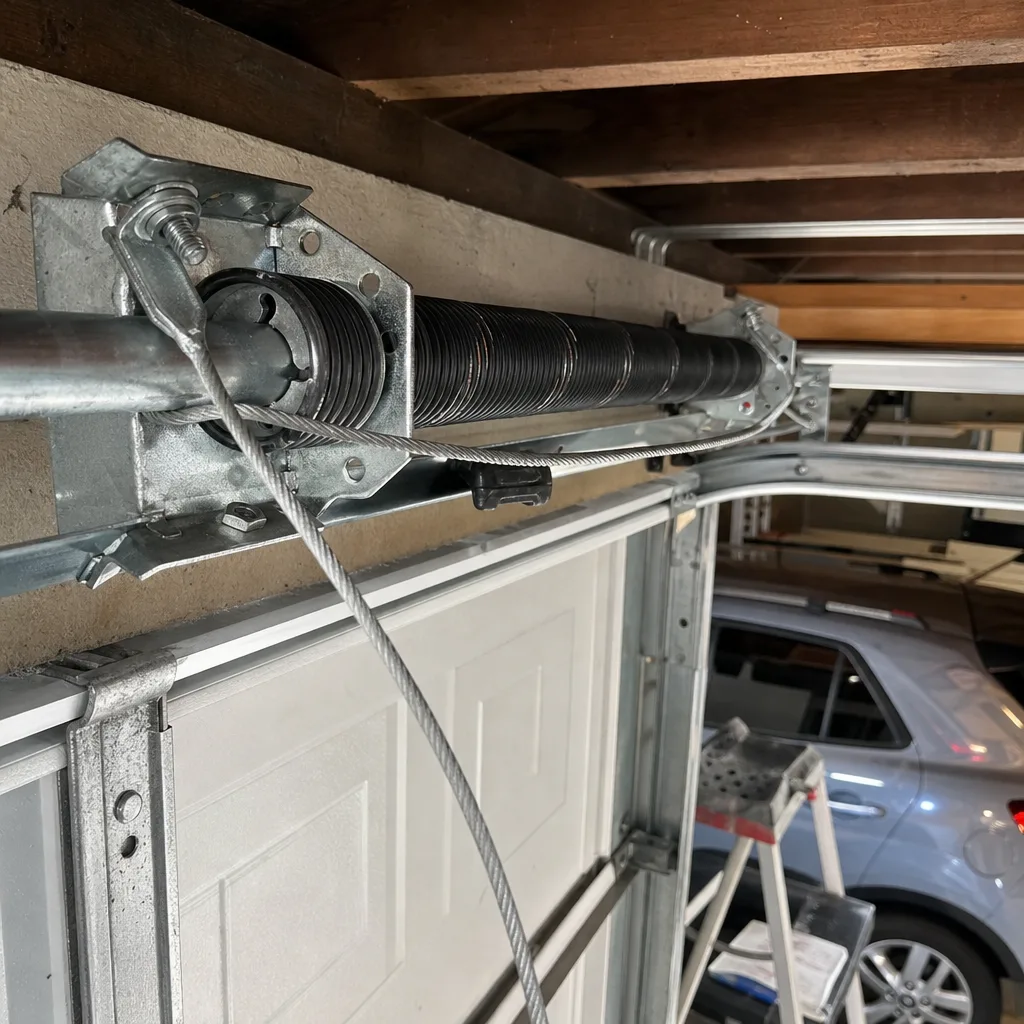
Torsion springs sit on the shaft above the door; extension springs run alongside the tracks. Either type can fail, and both telegraph their condition. Look closely for:
- Rust on more than a thin film. A light powdery dusting is normal. Flaking rust, pitting you can feel with a fingernail, or orange staining threaded through the coil means the spring has lost temper and is closer to snapping than it looks.
- An uneven coil gap. A spring with a clear gap or a coil that looks stretched and separated from its neighbors has already begun to fatigue. A healthy spring is a tight, even stack.
- A gap at the wind. At either end of the spring, the coil should close tightly against its cone or plate. A widening gap is a failure warning.
- Sound. A spring that twangs, pops or groans during a cycle is telling you it’s under abnormal load.
What a spring with roughly six months of life left looks like: the coil looks intact from across the garage, but up close there are two or three small rust pocks, a slight separation in one section of the coil, and the door has started to feel heavier at the halfway point of opening. It still works. It’s also on borrowed time.
Safety Caveat: Do Not Adjust Springs or Cables Yourself
Torsion springs and the cables under tension hold the entire weight of the door. They’re the single most dangerous component in the system and the reason spring work is a job for trained technicians, not a homeowner with a winding bar. Nothing on this checklist asks you to adjust, wind or release a spring, or to take tension off a cable. Your job is to recognize the signs and stop running the door until a professional sees it. If a cable has visibly frayed or a spring has snapped, don’t operate the opener at all; the door is unsupported and can come down hard. For Garage Door Repair Jamaica Plain, spring and cable failures are exactly the kind of work we handle, and it’s one of the clearest signs of a specialist over a general handyman.
How Freeze-Thaw Cycles Hit Seals, Rollers and Cable Drums
National maintenance schedules assume a gentle climate. Jamaica Plain’s winter is harder on three parts than those guides expect: the bottom seal, the rollers, and the cable drums.
The bottom seal. That rubber or vinyl strip along the bottom panel takes the most direct hit. When it’s pliable, it rides up over ice and settles tight to the floor. After a couple of seasons it stiffens, cracks along its length and stops sealing, which lets in both cold air and meltwater. Water that gets under a stiff seal then refreezes against the floor and the door bottoms out on ice, straining the opener on every cycle. Run a hand along the seal in spring: if it’s brittle, has visible cracks or doesn’t contact the floor evenly, it needs replacing before the next winter. This is one of the least expensive parts on the whole door and one of the most ignored.
Rollers. Rollers ride in the tracks and carry the door’s weight. Cheap plastic rollers develop flat spots and turn brittle in cold. Steel rollers wear through their bearings faster once grit from a thaw works inside. Push a roller with your thumb in October; if it doesn’t spin freely and quietly, it’s a candidate for replacement before winter locks everything in.
Cable drums. The drums at the top corners of the door spool the lift cables. Freeze-thaw cycles work moisture into the drum and cable interface, and that moisture carries grit that scores the cable. Inspect the cable where it wraps the drum for fraying strands. A cable that has started to separate into strands is finished, even if the door still operates.
If you notice your door dragging, sticking or cycling harder as temperatures drop, that’s the freeze-thaw signature and the moment to book garage door repair rather than wait it out. We answer 24/7, with fast dispatch from 7am to 7pm, Sunday through Friday, and same-day service when the schedule allows.
The Lubrication Schedule That Survives a New England Winter
Lubrication is the one maintenance task that pays back the most for the least effort, and it’s also where people get it wrong. The problem isn’t frequency so much as product. A lubricant that works fine in a Florida garage gums up and thickens in a New England cold snap, turning into a sticky trap for grit.
What to Use and What to Skip
- Use cold-rated white lithium grease or a silicone-based spray on the torsion spring coils, hinges, and the bearing plates. These stay supple at low temperatures and don’t attract grit the way heavier grease does.
- Use a light oil or silicone spray on rollers and the roller stems, applying sparingly. On sealed-bearing rollers, a drop at the stem is enough; forcing lubricant inside the bearing can push out the factory grease.
- Skip motor oil, WD-40 as a long-term lubricant, and any thick axle grease on the springs and hinges. Those are exactly the products that thicken in a cold snap and hold onto road grit. WD-40 is fine as a short-term penetrant or rust loosener, not a standing lubricant.
- Never lubricate the tracks. They should be clean and dry. Grease on a track collects grit and drags the rollers.
How Often
In Jamaica Plain, lubricate twice a year to match the two seasonal windows: early October before the first hard freeze, and again in March once the thaw settles. If your door cycles many times a day, add a light touch-up on the spring and hinges around midsummer. The October pass matters most because it carries you through the coldest months, when a dry, sticky hinge or a starved spring is most likely to complain.
This is also the time to think about the opener. A door that’s been lubricated properly puts less strain on the motor, and a Genie or Chamberlain unit will run quieter and last longer. If yours has started grinding or reversing unexpectedly, garage door opener repair is worth a look before the cold sets in.
Running the Balance Test and Auto-Reverse Test Yourself
These two safety checks are genuinely self-service, and running them takes a few minutes. They tell you whether the door is properly supported and whether the safety systems would stop it if someone were caught underneath.
The Balance Test (Door on Manual, No Opener)
- Disconnect the opener by pulling the release cord, so the door moves on its springs alone.
- Raise the door to about waist height by hand and stop.
- Let go. A well-balanced door stays roughly where you left it. A door that sinks on its own, or springs upward, is out of balance and carrying too much or too little spring tension.
- Repeat at the halfway point and at three-quarters open.
An out-of-balance door is a warning, not a diagnosis you fix yourself. Lift it back to the fully open position and reconnect the opener if you can do so safely; then have a technician look at it. Balance problems usually trace to spring tension, and spring tension is not a homeowner adjustment.
The Auto-Reverse Test (With the Opener Reconnected)
- With the door open, lay a piece of wood about as thick as a two-by-four flat on the floor in the door’s path.
- Close the door with the opener.
- It should reverse on contact with the wood and travel back up. If it doesn’t, the contact safety system needs attention.
- Separately test the non-contact (photo-eye) sensors by passing an object between them while the door is closing; the door should stop and reverse.
If the door fails either test, stop using the opener and get it checked. On a LiftMaster or Chamberlain unit, a failing reverse test is often a sensor alignment or a worn part rather than a dead motor. The safest move is to leave the door open, disconnect the opener, and call for a professional look. For a full new door and opener this is part of what’s set up correctly during garage door installation; on an existing door it’s a repair call.
The Jamaica Plain Seasonal Checklist Calendar
A generic quarterly schedule doesn’t match the seasons here. The two critical windows in Jamaica Plain are October, before the first freeze, and March, after the thaw. Everything else is a lighter touch-up.
October: Pre-Winter Pass (The Important One)
- Lubricate springs, hinges, bearing plates and roller stems with a cold-rated product.
- Inspect the bottom seal for cracks and stiffness; replace it before winter if it fails a hand test.
- Check cables at the drums for fraying; look at spring coils for rust and uneven gaps.
- Run the balance and auto-reverse tests.
- Clear the tracks of grit with a dry cloth; check for loose hinge screws and tighten any that turn easily.
- Test photo-eye sensors and clean the lenses.
March: Post-Thaw Pass
- Re-lubricate everything the winter dried out; cold and grit pull lubricant off the springs and hinges.
- Check the bottom seal again, since the freeze-thaw cycle has been working on it all winter.
- Inspect rollers for flat spots caused by cold and grit; spin each by hand.
- Re-run the balance and reverse tests, since an out-of-balance door often reveals itself after a hard winter.
- Look at the cables where they wrap the drums for any newly frayed strands.
Mid-Summer Touch-Up
- A light re-lubrication of the spring and hinges.
- A quick visual scan of cables and springs.
- Clean and re-test the sensors.
If you’d rather have a trained eye run the October pass and catch the slow failures before they become emergency calls, that’s the job we’re here for.
Tracks, Hinges, Hardware and the Door Panel Itself
Beyond springs, cables and seals, four other areas deserve a look each season.
Tracks. The vertical and horizontal tracks should be straight and parallel, with an even gap between the door edge and the track on both sides. A dent or bend that pinches the gap will drag a roller and strain the opener. Clean tracks with a dry cloth; don’t oil them. If a track is visibly bent, a technician can often straighten it, but a badly kinked track should be replaced rather than forced back into shape.
Hinges and fasteners. Hinges connect the panels and take repeated flex. Check each screw and bolt; a screw that turns easily by hand is loose and should be snugged up. Don’t overtighten, though; a stripped hole in a steel panel is harder to fix than a loose screw.
Bolts on the spring plate and the opener bracket. These carry load and shouldn’t be touched beyond a visual check and a snug turn on hardware you can reach safely without coming near a tensioned spring. Leave anything involving the spring shaft to a professional.
The door panels. Wood doors common on older Jamaica Plain garages swell and crack over winter; a light sand and paint touch-up on exposed wood before October protects against moisture. Steel doors from a Clopay or Amarr panel set can develop dents at the bottom where an operator bumps them; small dents are cosmetic, but deep dents or cracked panels can weaken the door and should be assessed. Check the hardware attachment points on any panel for stress cracks.
If you find yourself needing parts for a DIY-friendly fix, find the right component and have a professional confirm the fit. We can help source what’s needed and install it correctly the first time, so a simple repair stays simple.
Common Mistakes to Avoid
- Lubricating the tracks. It’s the most common error. Tracks should be clean and dry; grease attracts grit and turns a smooth door into a loud one.
- Using thick grease in October. A heavy grease that flows at room temperature will thicken in a Jamaica Plain cold snap and bind the springs and hinges. Use a cold-rated product instead.
- Ignoring a stiff bottom seal. A cracked, brittle seal lets winter water and cold air in and bottoms the door out on ice. It’s a cheap part and a quick fix that heads off bigger strain on the whole system.
- Adjusting springs or cables yourself. These hold the door’s full weight under tension and can cause serious injury. Recognize the failure signs and hand the work to a trained technician.
- Skipping the reverse test. A door that doesn’t reverse on contact is a safety hazard every time someone or something is under it. Test it each season.
- Waiting for the spring to snap. A spring with visible rust pocking, an uneven coil gap or a heavy feel at the halfway point has warned you. Replacing it on your schedule beats an emergency repair on the door’s schedule.
- Assuming all hardware ages the same. An older door and a newer one on the same Jamaica Plain street won’t follow the same schedule. Match the maintenance to the door in front of you.
When to Call a Professional
Some of this checklist you can run yourself: the visual scan, the lubrication, the balance and reverse tests. But several signs mean stop and call: a frayed or separated cable, a spring that has snapped or shows flaking rust and a coil gap, a door that won’t stay balanced by hand, a door that fails the auto-reverse test, bent or pinched tracks, or an opener that grinds, reverses unexpectedly or won’t hold the door. Those point to load-bearing components that need a trained technician. Garage Door Repair Jamaica Plain offers free estimates in Jamaica Plain, so it costs nothing to have a professional look. Call (833) 468-3616. We answer 24/7, with fast dispatch from 7am to 7pm, Sunday through Friday. The estimate sets the price before any work begins, so there’s no surprise invoice at the end.
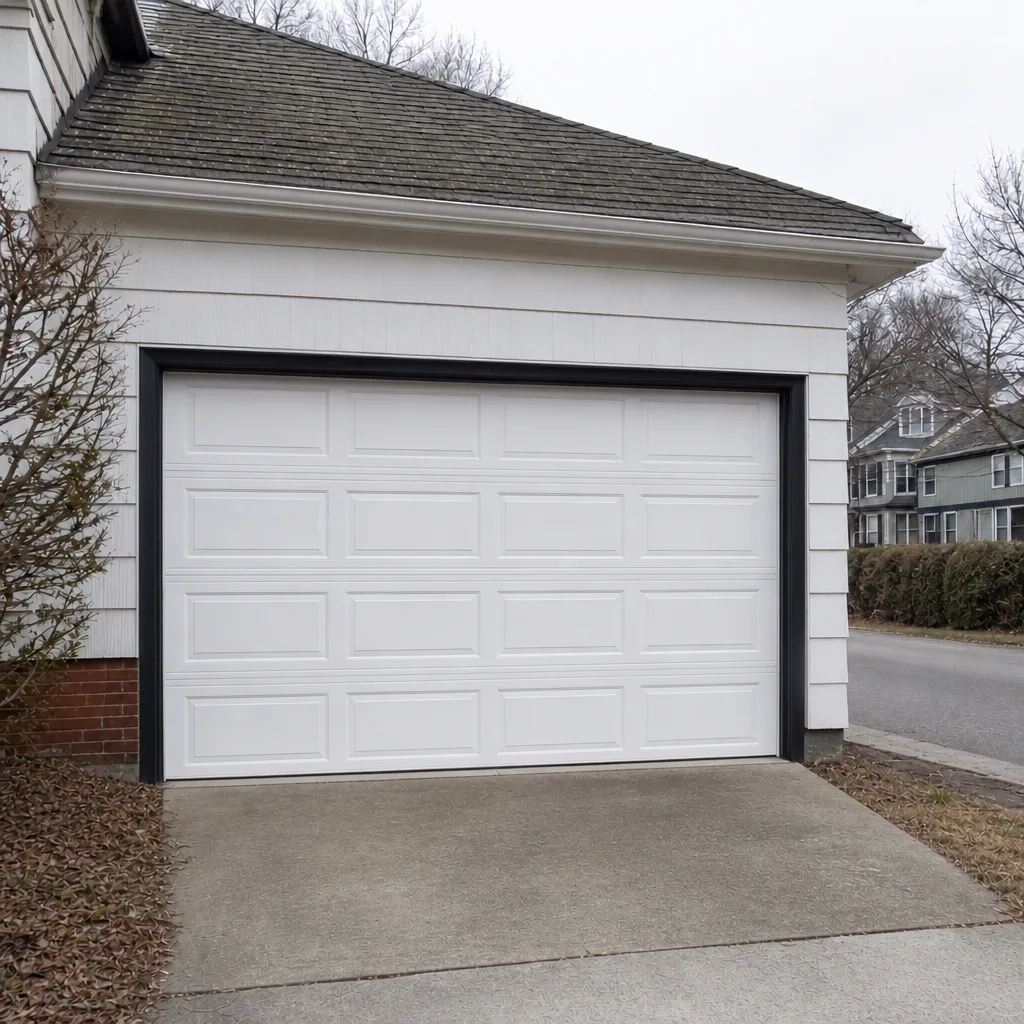
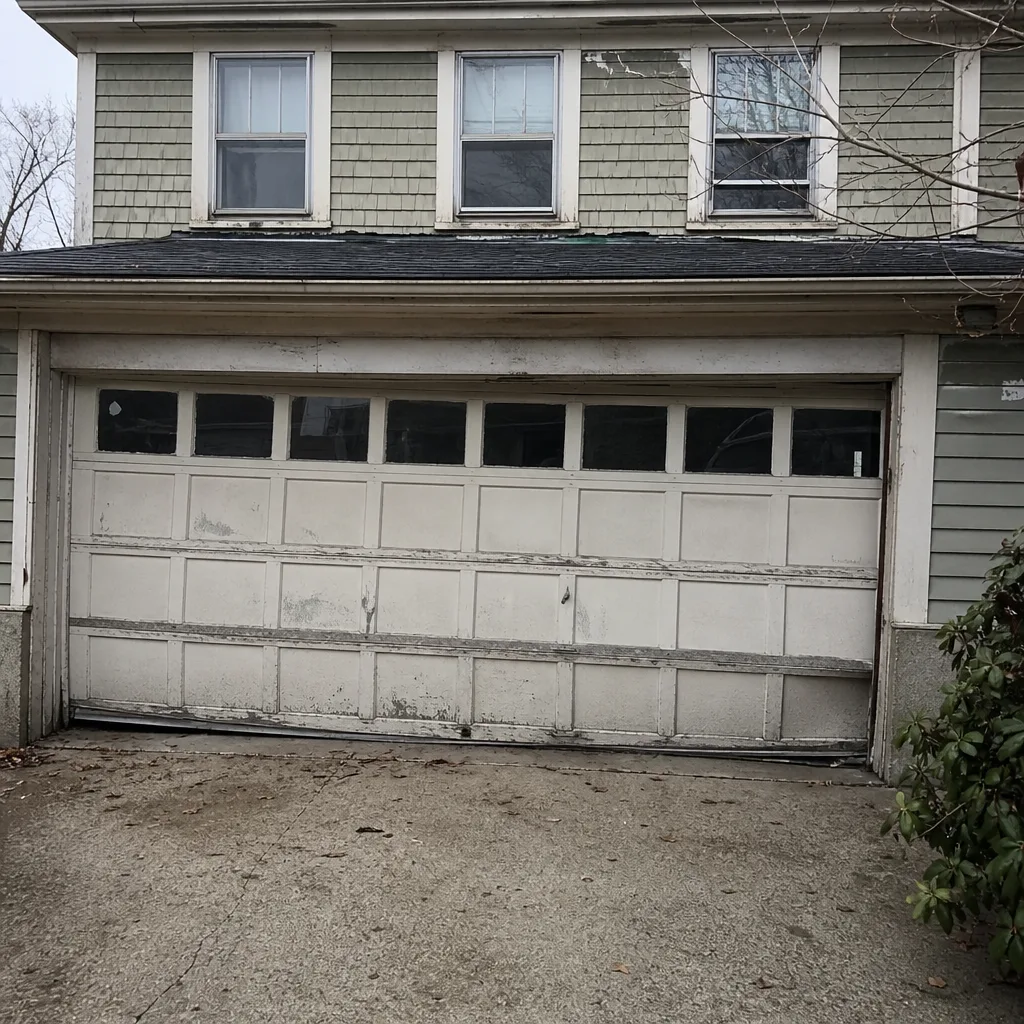
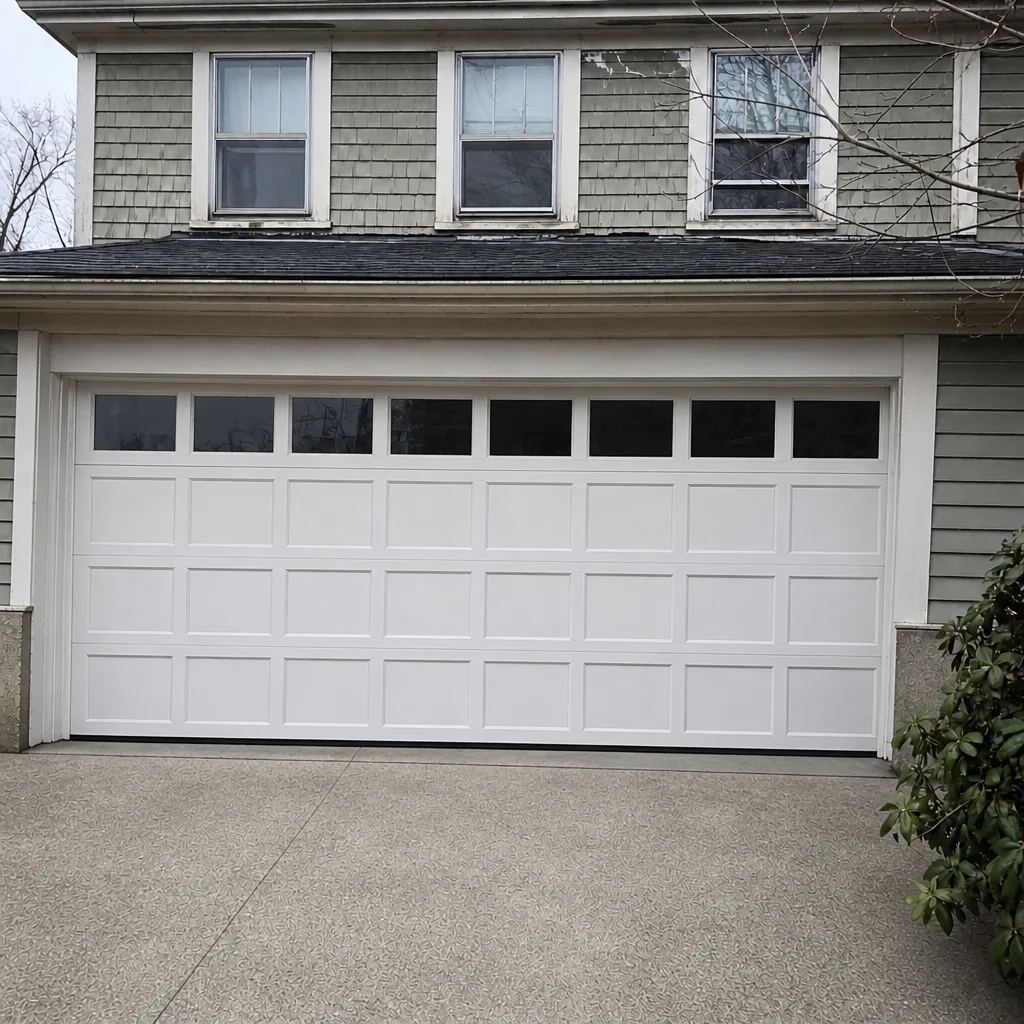
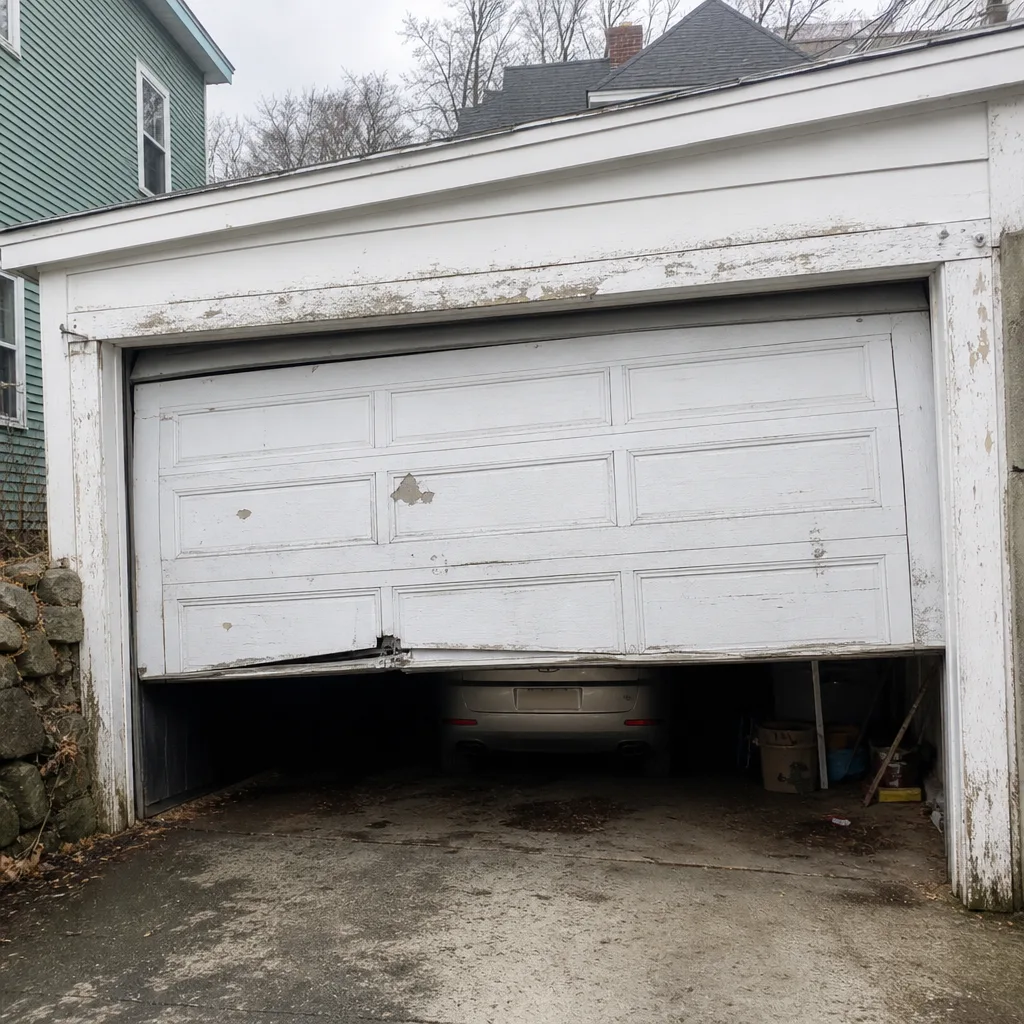
See the difference
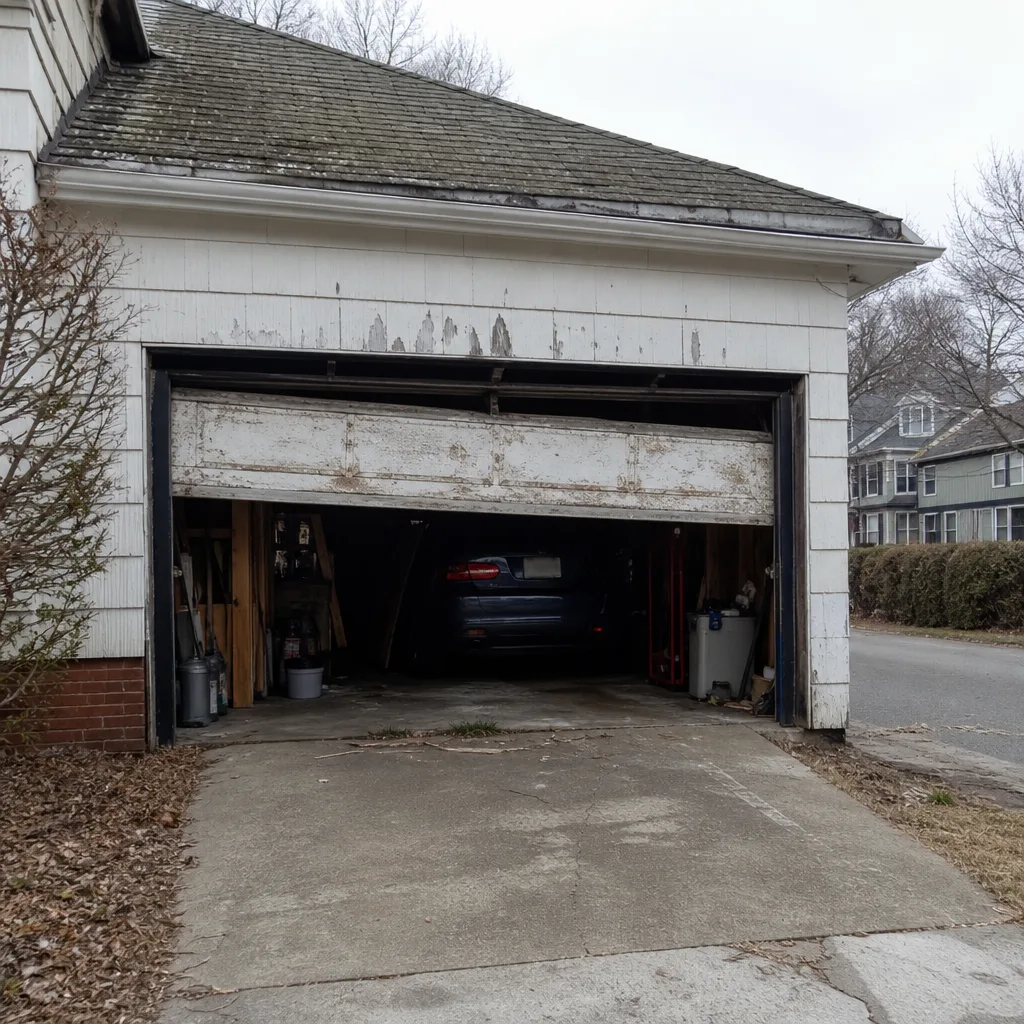 Before
 After
 Before
 After
 Before
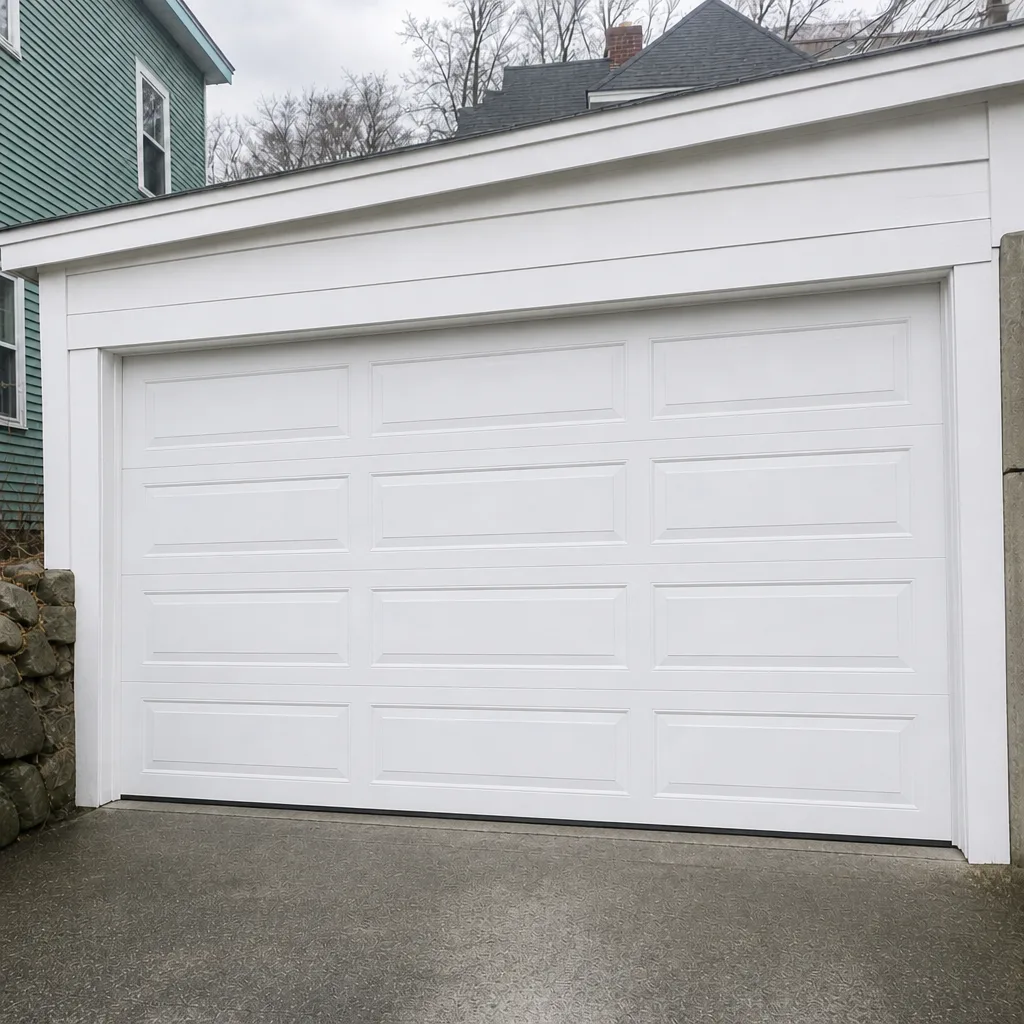 After
Frequently Asked Questions
Twice a year at minimum, with one pass in early October before the first freeze and one in late March after the thaw. A mid-summer touch-up is worthwhile if the door cycles many times a day. The October and March windows line up with the freeze-thaw cycle that does the most wear here.
You can lubricate the springs, hinges and roller stems safely, and you can run the balance and auto-reverse tests. You shouldn’t adjust springs or cables, which hold the door’s full weight under tension and can cause serious injury. Leave those to a trained technician.
A spring with months left typically has a few rust pocks, a slight separation or uneven gap in the coil, flaking rust through the coil, and the door feels heavier at the halfway point of opening. It still works, but it’s on borrowed time. That’s the point to schedule replacement rather than wait for the snap.
Cold thickens lubricant, stiffens the bottom seal and lets grit from meltwater work into rollers and drums. A door that runs smooth in summer and grinds in January is showing the freeze-thaw effect, which is exactly why the October lubrication pass matters.
Yes. Estimates are free, and the price you’re quoted is set before any work starts, so the written estimate is the final price. Call (833) 468-3616 for an exact quote.
It’s usually a repair. A reversing door often means a misaligned sensor, a binding door or a worn part rather than a dead motor. Have a technician check the opener and the door’s balance, since a stiff door can trigger the safety reverse. On LiftMaster, Chamberlain or Genie units, most of these issues are fixable. Call (833) 468-3616 for an exact quote.
The Bottom Line
A maintenance checklist is a diagnostic tool, not a chore list. What makes it work in Jamaica Plain is knowing what “not fine” looks like: a spring with rust pocks and a coil gap, a frayed cable at the drum, a bottom seal that’s gone brittle. Run the October pass before the freeze, the March pass after the thaw, and the lubrication and safety tests in between. Recognize the load-bearing signs and hand those to a professional rather than reaching for a wrench. That’s how a door in an old JP garage gets through a New England winter without an emergency call.
If it’s time for a fresh look, a repair or a new door, call (833) 468-3616 for a free estimate. We answer 24/7, with fast dispatch from 7am to 7pm, Sunday through Friday, and the written quote sets the price before any work begins.
Written by the team at Garage Door Repair Jamaica Plain.